1 hr 30 min
Palais Garnier Self-Guided Tour
- Expert local guide
- Small group
- Skip-the-line access
Palais Garnier — Guided Tours & Reserved Entry
Step inside Charles Garnier's baroque palace, where gilded staircases meet scarlet velvet.
Compare fares, pick the fit — all bookings are mobile-voucher and eligible for free cancellation where shown.
1 hr 30 min
1 hr 30 min
45 min
Palais Garnier sells self-guided access and a guided tour option, and picking between them shapes what you actually see inside this Paris landmark. Most opera garnier paris tickets tour searches come down to one question: explore the foyers alone, or follow a guide through areas included only on the guided visit.
| Individual Access Ticket Self-guided, no commentary |
Top pick Guided Guided Tour Guided, includes auditorium access |
|
|---|---|---|
| Access method | Self-guided entry, timed slot | Guided small-group visit with docent |
| Areas included | Grand Foyer, Grand Staircase, museum | Grand Foyer, Grand Staircase, auditorium (subject to rehearsals) |
| Wait time | Skip-the-line entry with timed slot | Skip-the-line entry, grouped arrival |
| Commentary | — (self-guided, no docent) | ✓ guide explains history and architecture |
| Price | 25 EUR adult non-resident | Priced per operator's guided tour tier |
| Flexibility | Flexible within opening hours | Fixed start time, fixed duration |
| Best for | Independent visitors, photographers | First-timers wanting context and auditorium access |
| See tickets & prices |
Verdict: First-time visitors get more value from the guided opera garnier paris tickets tour tickets since the guide unlocks auditorium viewing and explains the Grand Foyer's details, while independent travelers who prefer their own pace can pick the individual access ticket instead.
Worth it for architecture and history enthusiasts
An opera garnier paris tickets tour delivers excellent value when you consider what the 25 EUR entry unlocks. The self-guided option grants access to the Grand Foyer with its gilded mirrors and frescoed ceilings, the auditorium featuring Marc Chagall's controversial 1964 ceiling painting, and the grand staircase in white marble. Guided tours—whether the theatrical performance-enhanced version or the expert-led private sessions—add narrative depth to Garnier's Second Empire design choices and the building's role in Parisian cultural life since 1875. For visitors prioritizing architectural detail and Belle Époque opulence over operational performance spaces, the daytime tours offer better value than evening tickets. The visit typically spans 60–90 minutes, making the per-hour cost reasonable compared to Paris museum passes. Skip it if you prefer active cultural experiences over static interiors, but for anyone drawn to 19th-century decorative arts or the Phantom's real-world inspiration, opera garnier paris tickets tour options justify the spend.
Bottom line: The Palais Garnier tours convert the entry fee into a meaningful architectural experience for visitors who value ornamental craft over live performance context.
Most Paris visitors comparing the two opera houses pick Palais Garnier for its ornate architecture and daytime guided visits, while Opéra Bastille suits those prioritizing a modern performance venue over sightseeing. If you want a skip-the-line Palais Garnier tour with guided access to the Grand Foyer, Garnier wins; Bastille has no comparable daytime tour program.
|
Top pick Palais Garnier |
Opéra Bastille | |
|---|---|---|
| What you see | Gilded Grand Foyer, Chagall ceiling, Grand Staircase | Modern glass-and-steel auditorium, working stage house |
| Guided daytime tours | ✓ regular guided tours available | — no public daytime guided tours |
| Architecture style | 1875 Beaux-Arts, ornate interior | 1989 contemporary, minimalist design |
| Typical visit duration | 1–1.5 hours (guided tour) | No public visit — performance-only |
| Entrance fee | 25 EUR (adult non-resident) | No sightseeing ticket — opera tickets only |
| Address | Place de l'Opéra, 75009 Paris | Place de la Bastille, 75012 Paris |
| Best for | Architecture lovers, photographers, history fans | Opera and ballet performance attendees |
| Booking constraint | Tours bookable in advance, timed entry | Tickets tied to specific performance dates |
| Opening hours (sightseeing) | 10:00–17:00 daily | Not open for daytime sightseeing |
| See tickets & prices |
Verdict: Choose Palais Garnier for a daytime opera garnier paris tickets tour through gilded interiors and Chagall's ceiling; choose Opéra Bastille only if you're attending an evening performance rather than sightseeing.
Hand-picked experiences loved by thousands of travelers
2 hours
Explore the lavish interiors of Paris's legendary opera house with a dedicated personal guide
2 hours 30 minutes
Free Cancellation
Discover the opulent Opera House with a specialist guide who reveals its artistic treasures and theatrical legends
1.5 hours
Free Cancellation
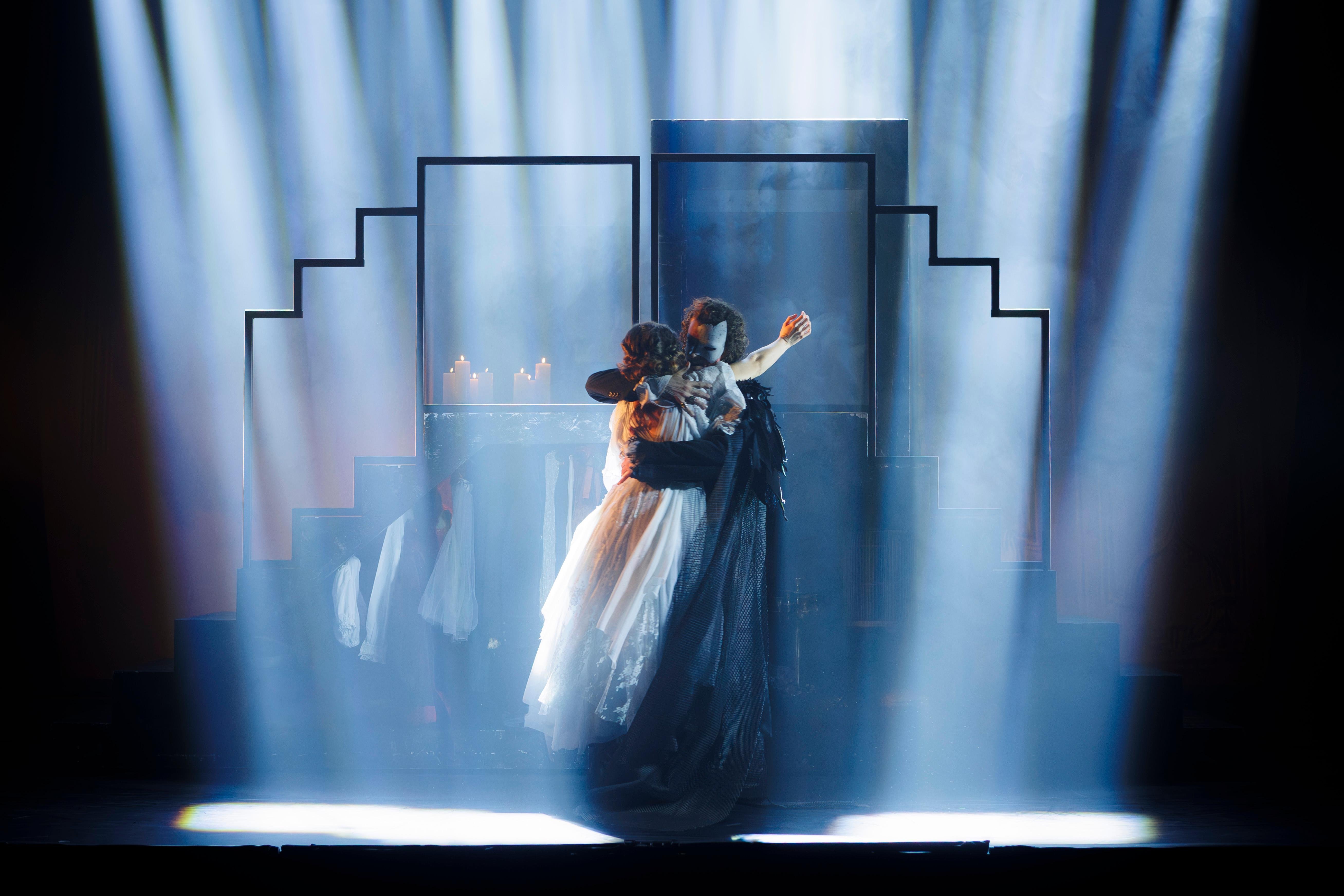
Experience a contemporary French musical adaptation of Gaston Leroux's legendary tale with live performances
1 hour 5 minutes
Free Cancellation
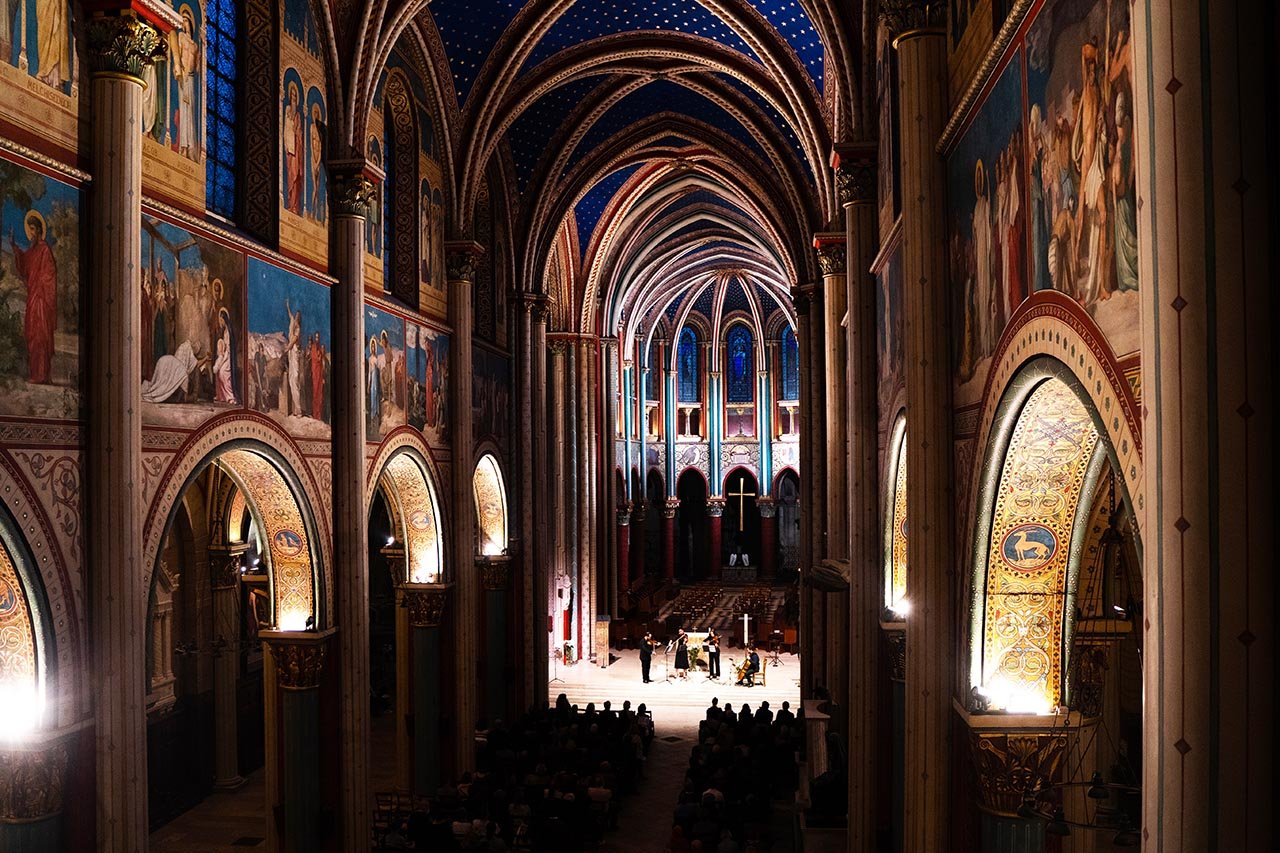
Enjoy timeless classical masterpieces live inside one of the oldest medieval churches in Paris' Latin Quarter.
75 minutes
Free Cancellation
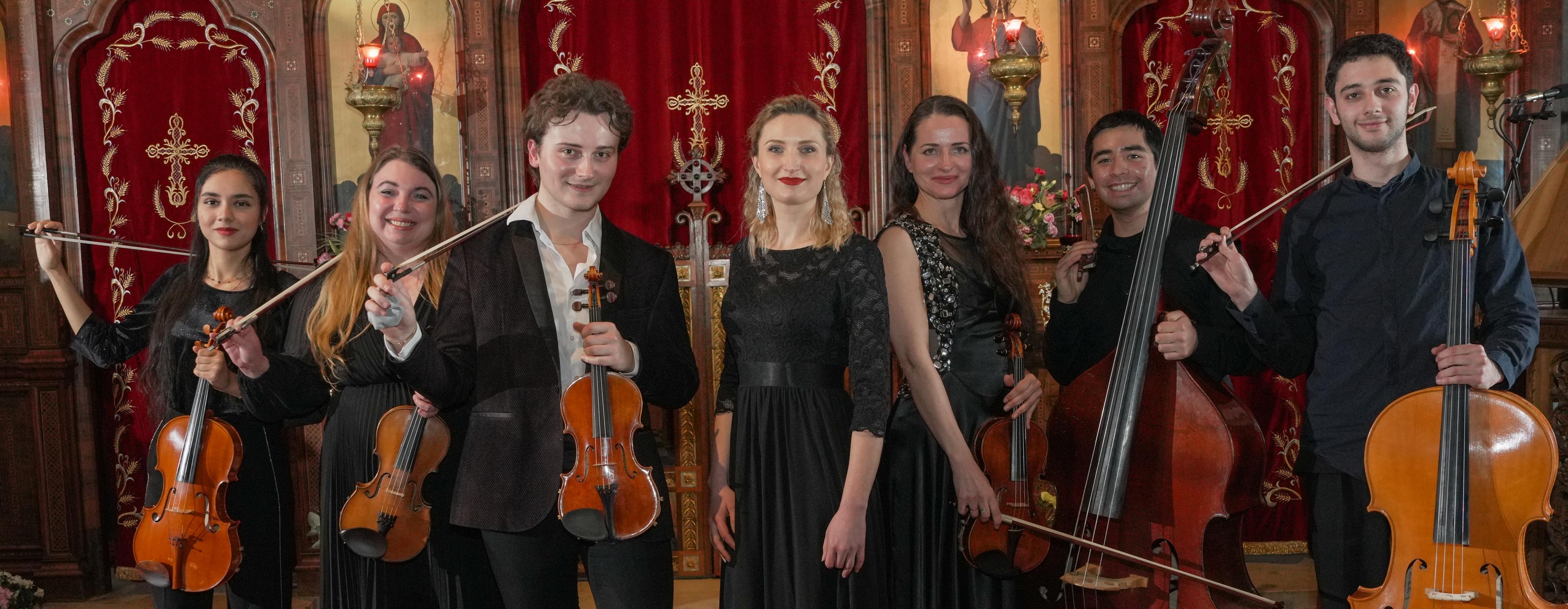
Attend a 75-minute live orchestral performance in one of Paris's most beautiful sacred spaces
1-2 days
Free Cancellation
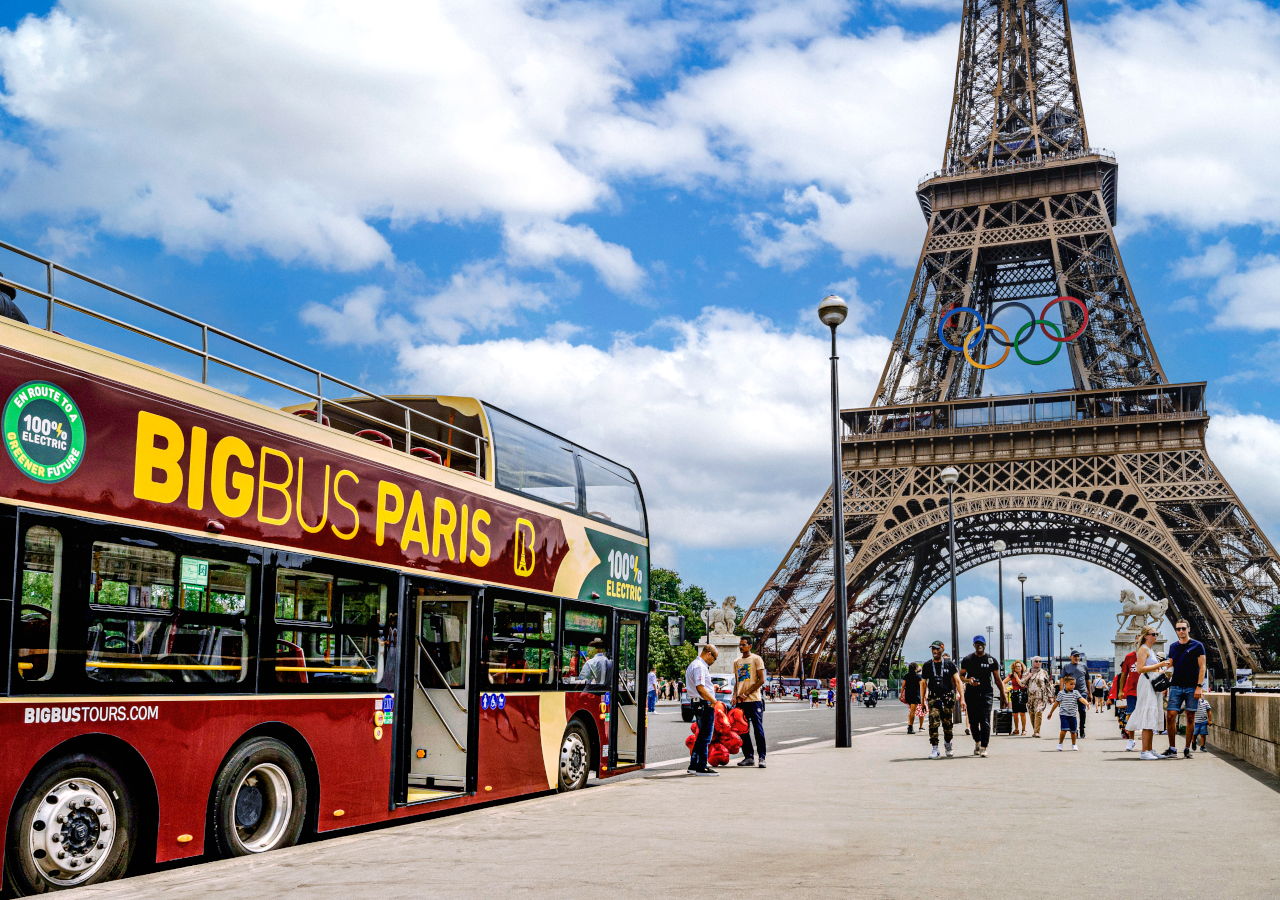
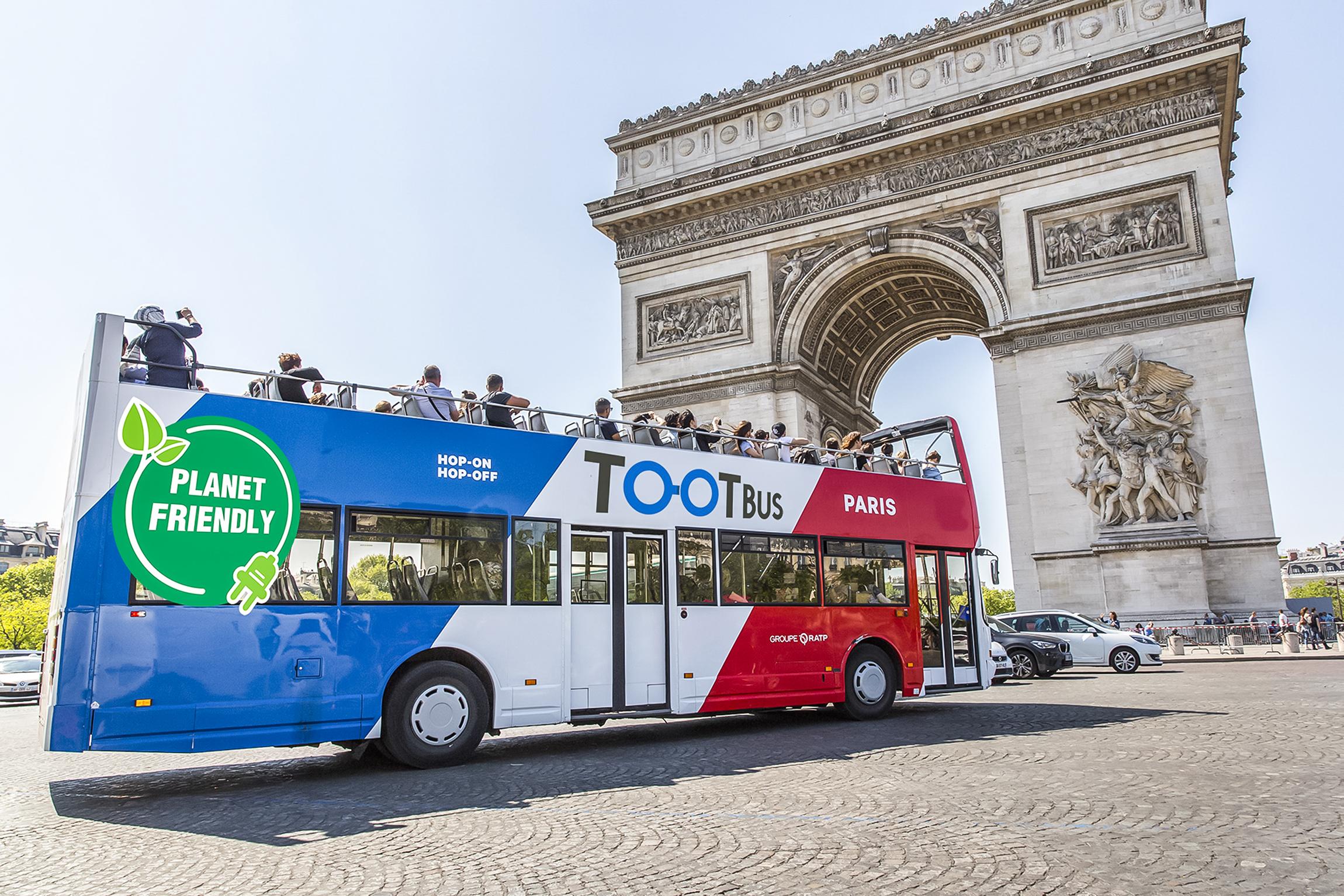
Discover the French capital aboard an open-top double-decker with flexible sightseeing and audio guide
24, 48 or 72 hours
Free Cancellation
Discover the City of Light aboard eco-friendly open-top buses with flexible passes and onboard commentary
1 hour
Free Cancellation
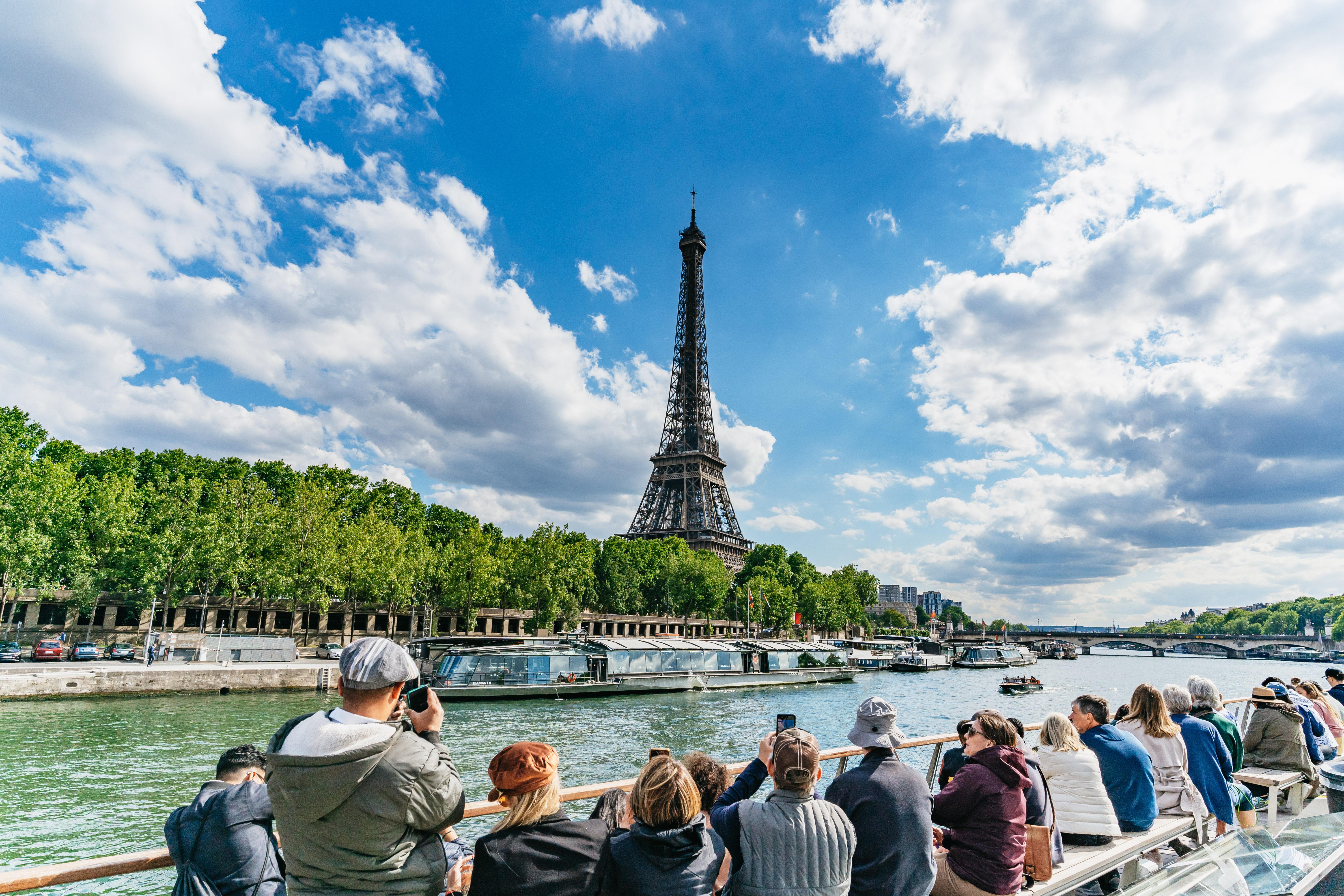
Glide past Paris's most celebrated monuments on a relaxing one-hour boat journey along the Seine.
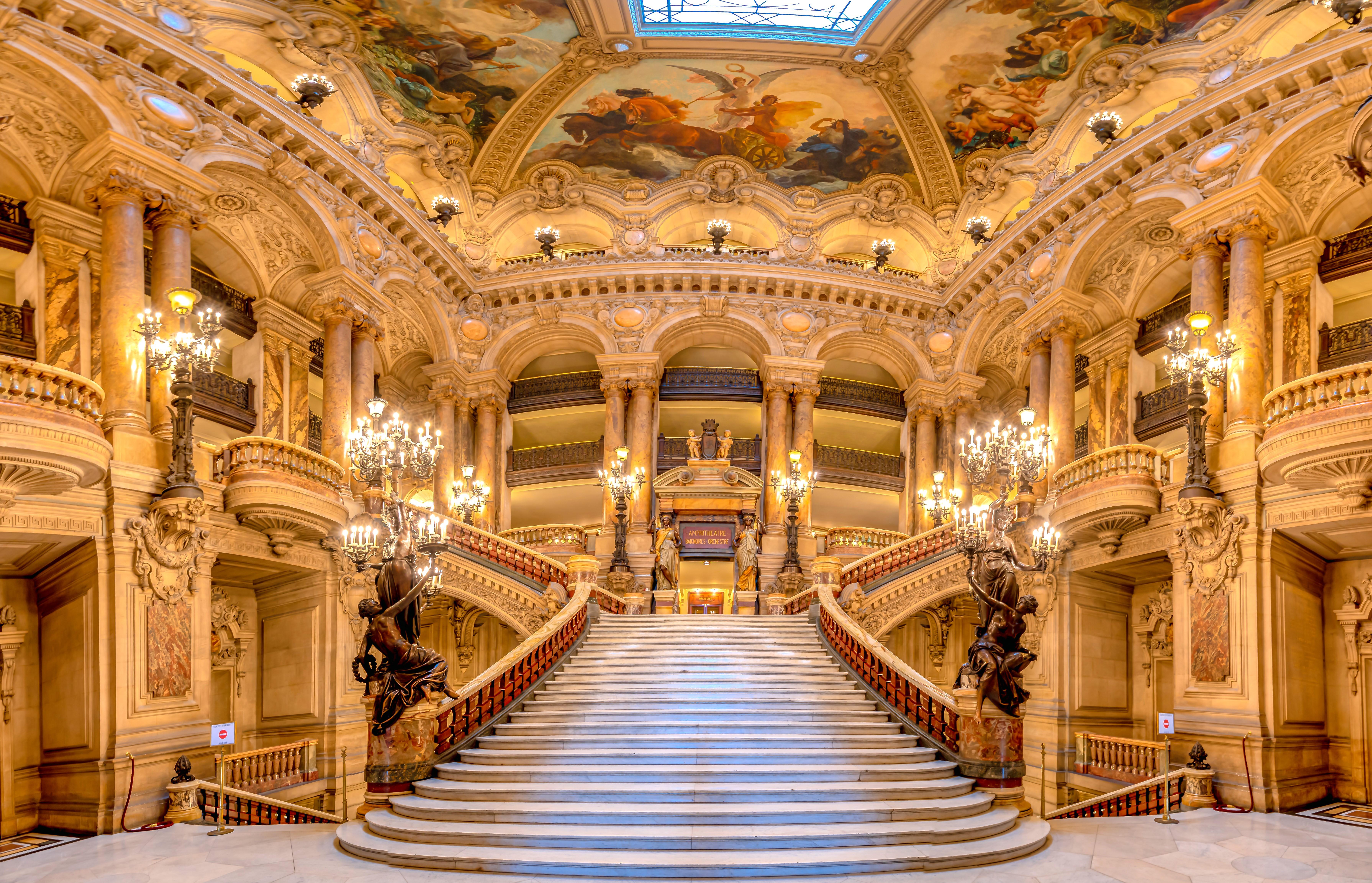
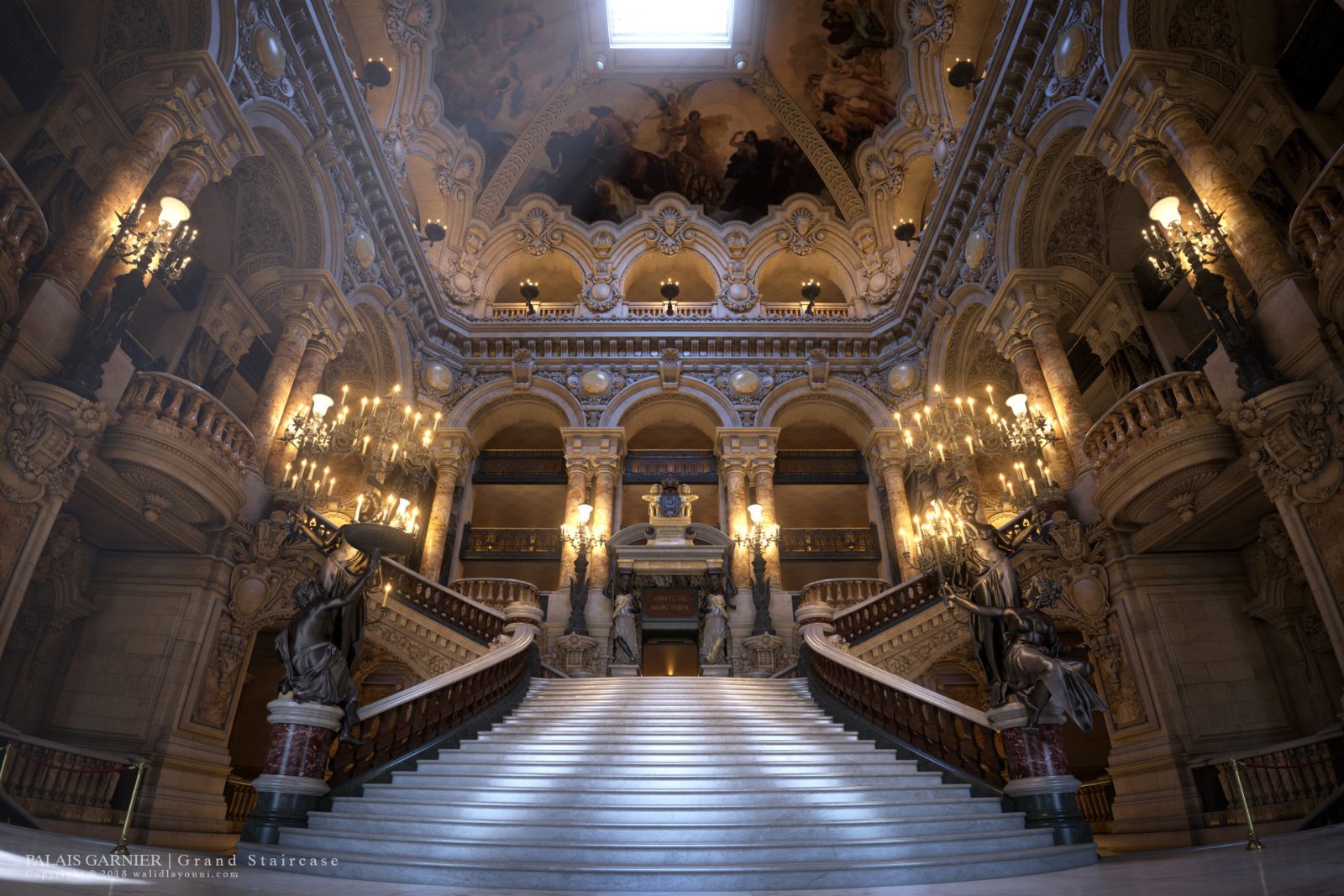
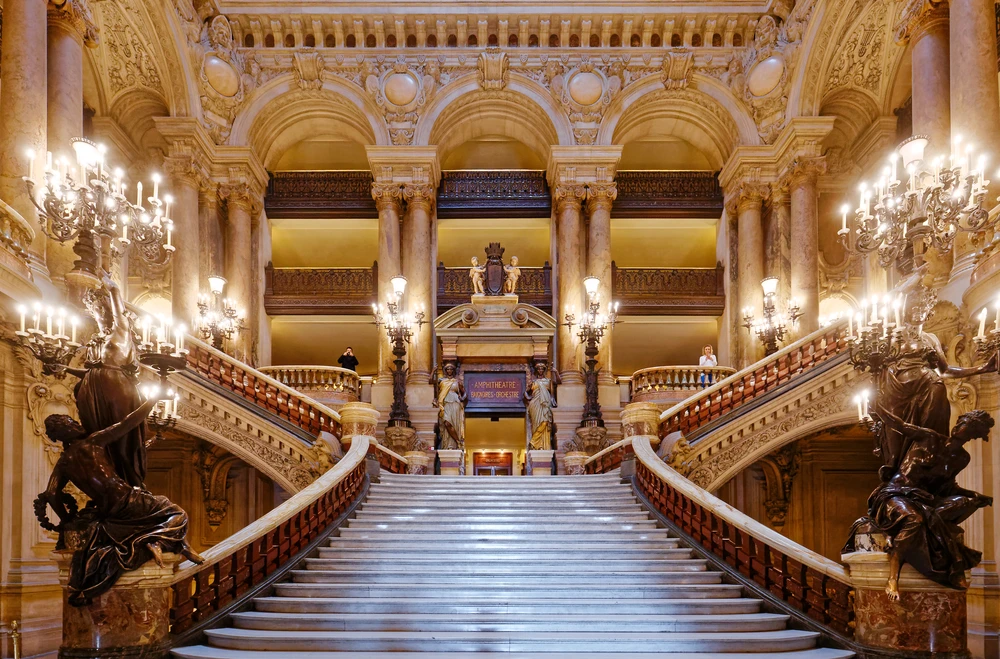
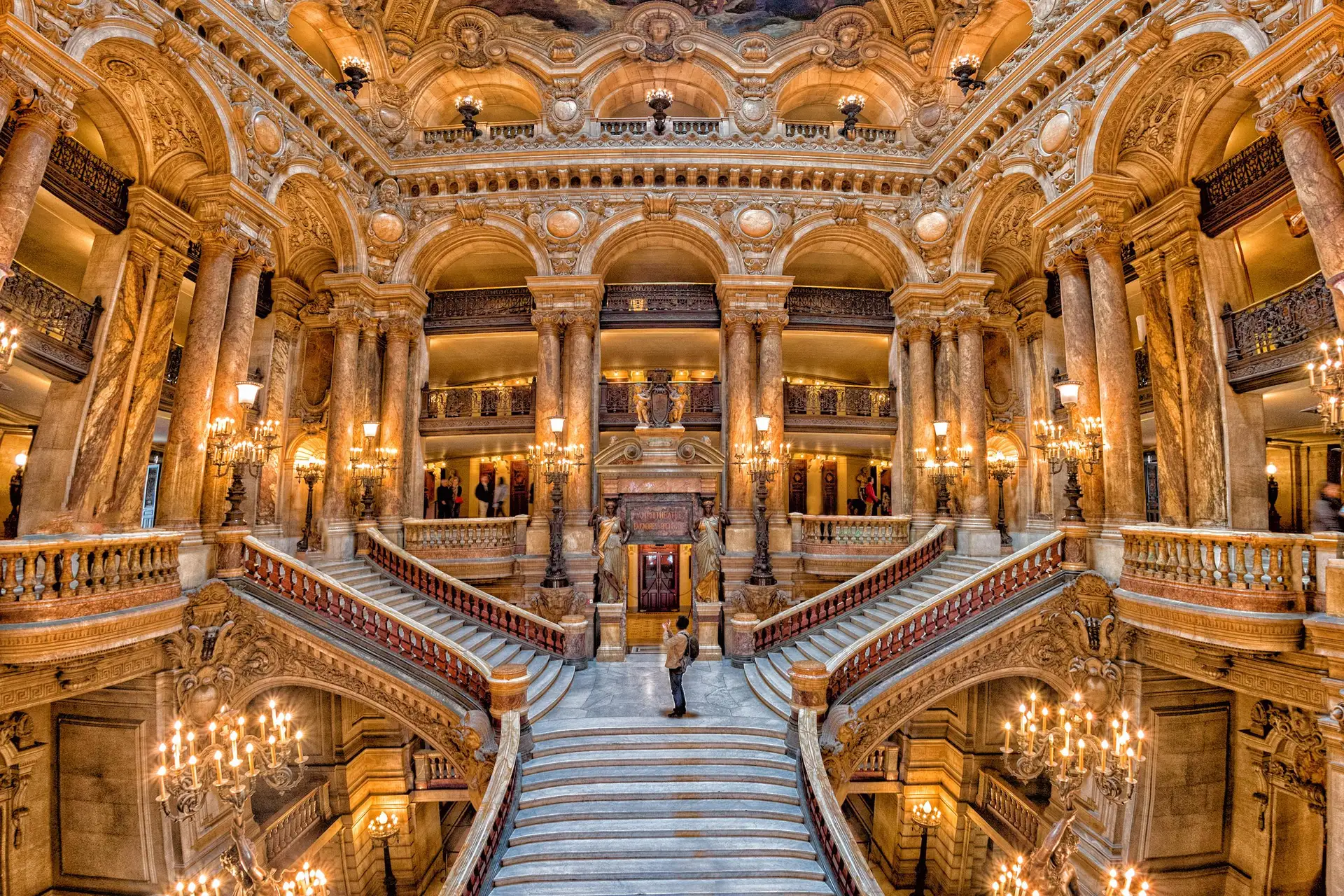
A white marble staircase rising beneath a coffered ceiling, flanked by an onyx balustrade and bronze torch-bearing statues. It was designed by architect Charles Garnier as a deliberate stage for arriving audiences to see and be seen.
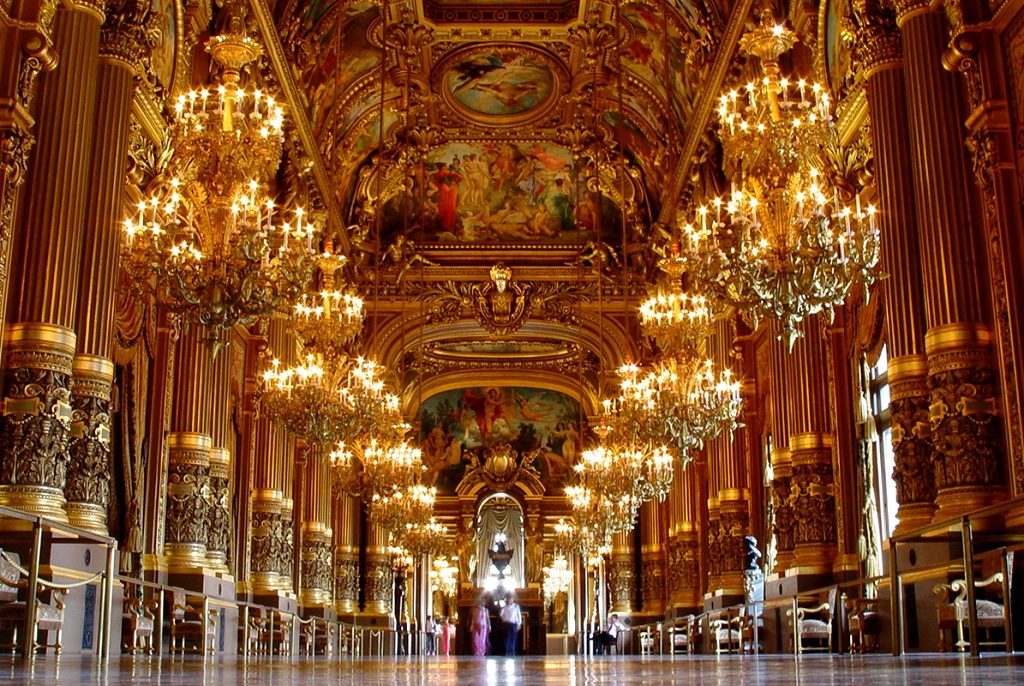
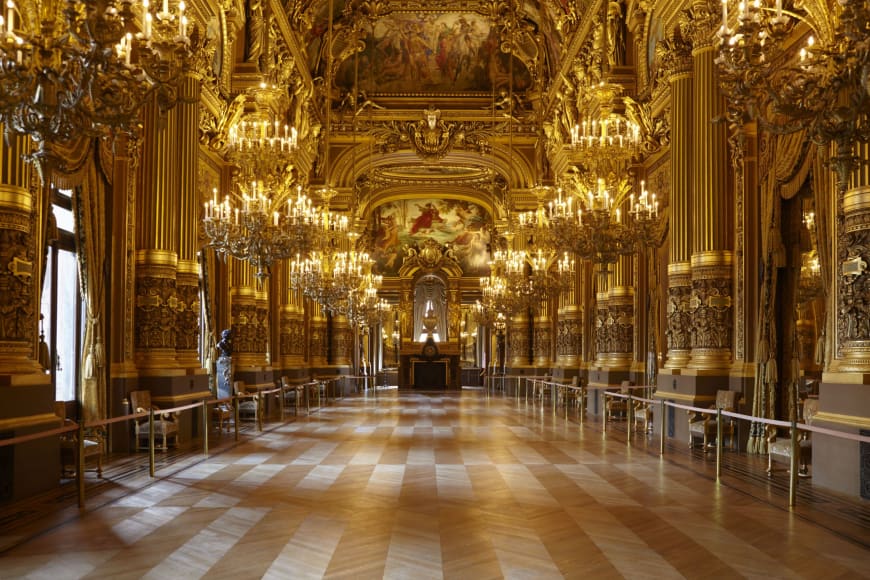
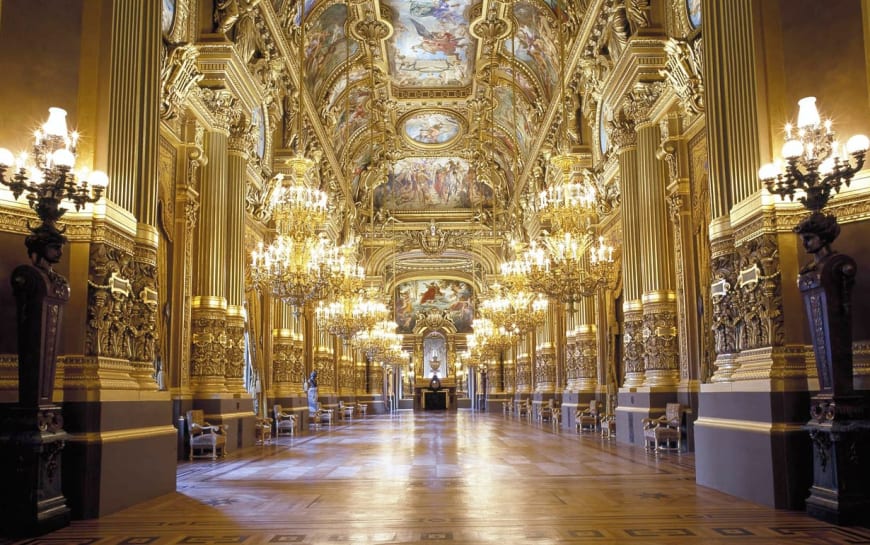
A gallery over 18 meters long styled after the Hall of Mirrors at Versailles, lined with gilded stucco and ceiling paintings by Paul-Jacques-Aime Baudry. Mirrors on both walls double the apparent length of the room.
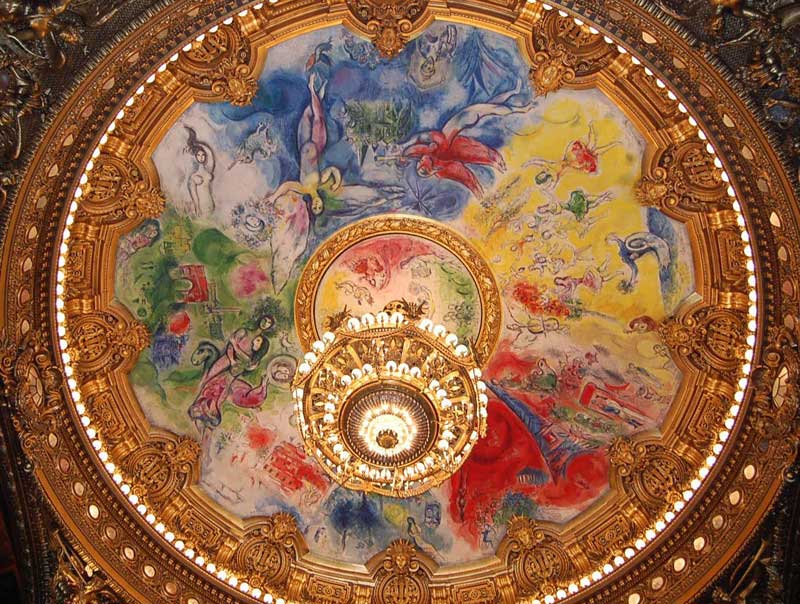
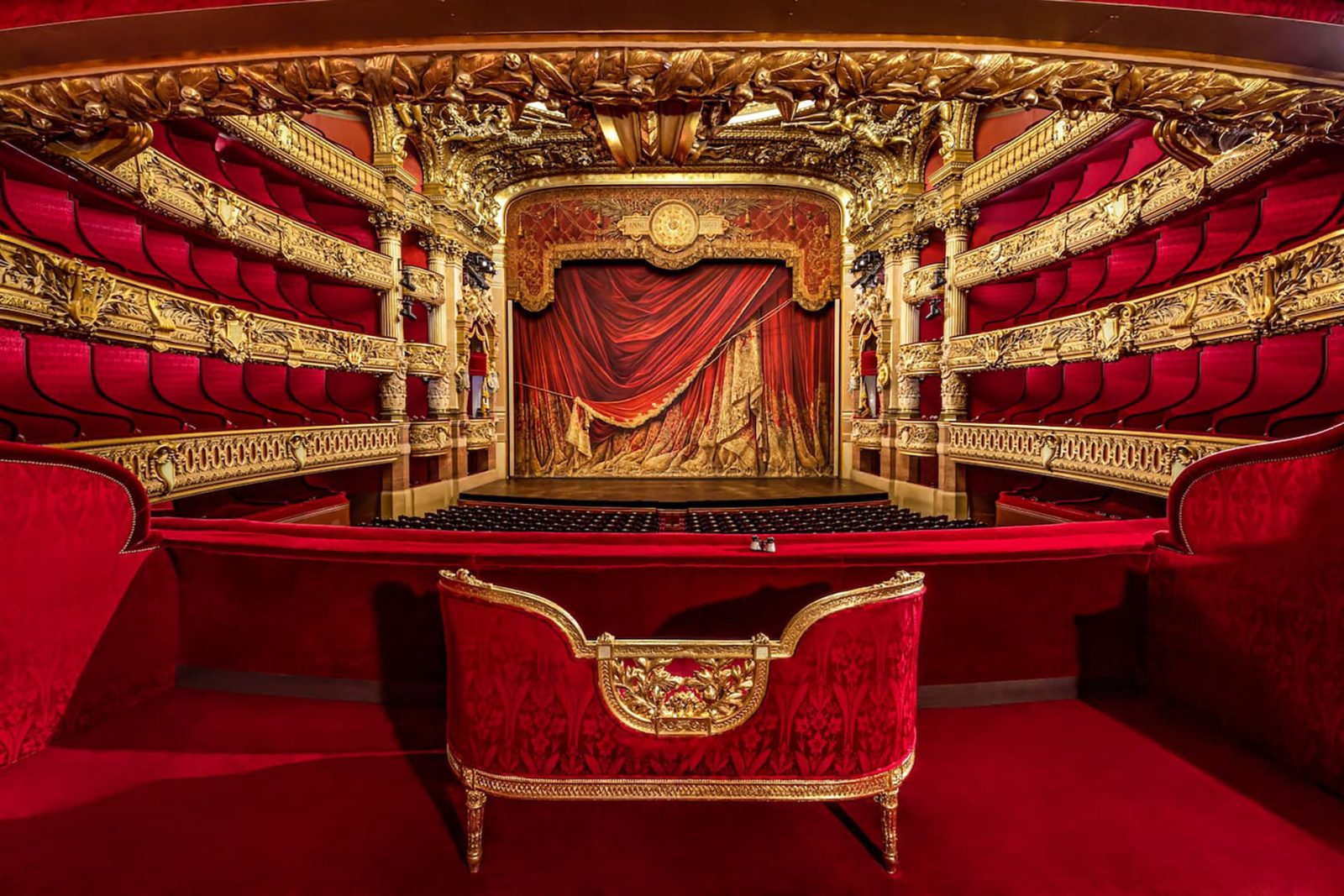
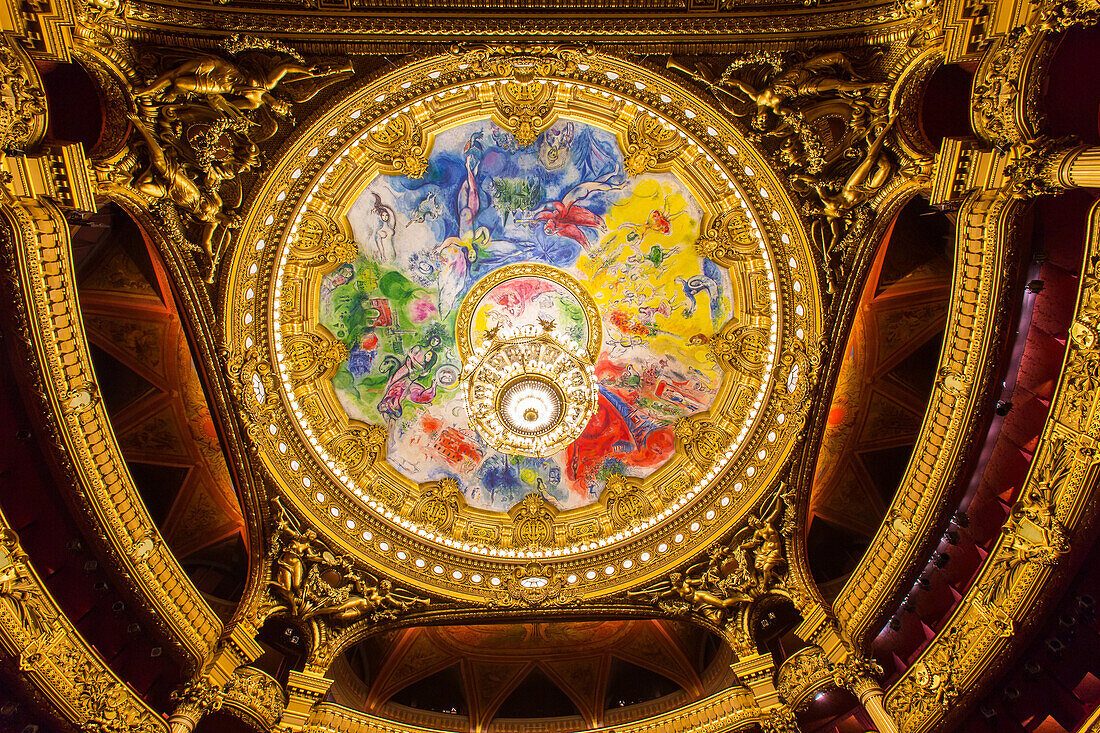
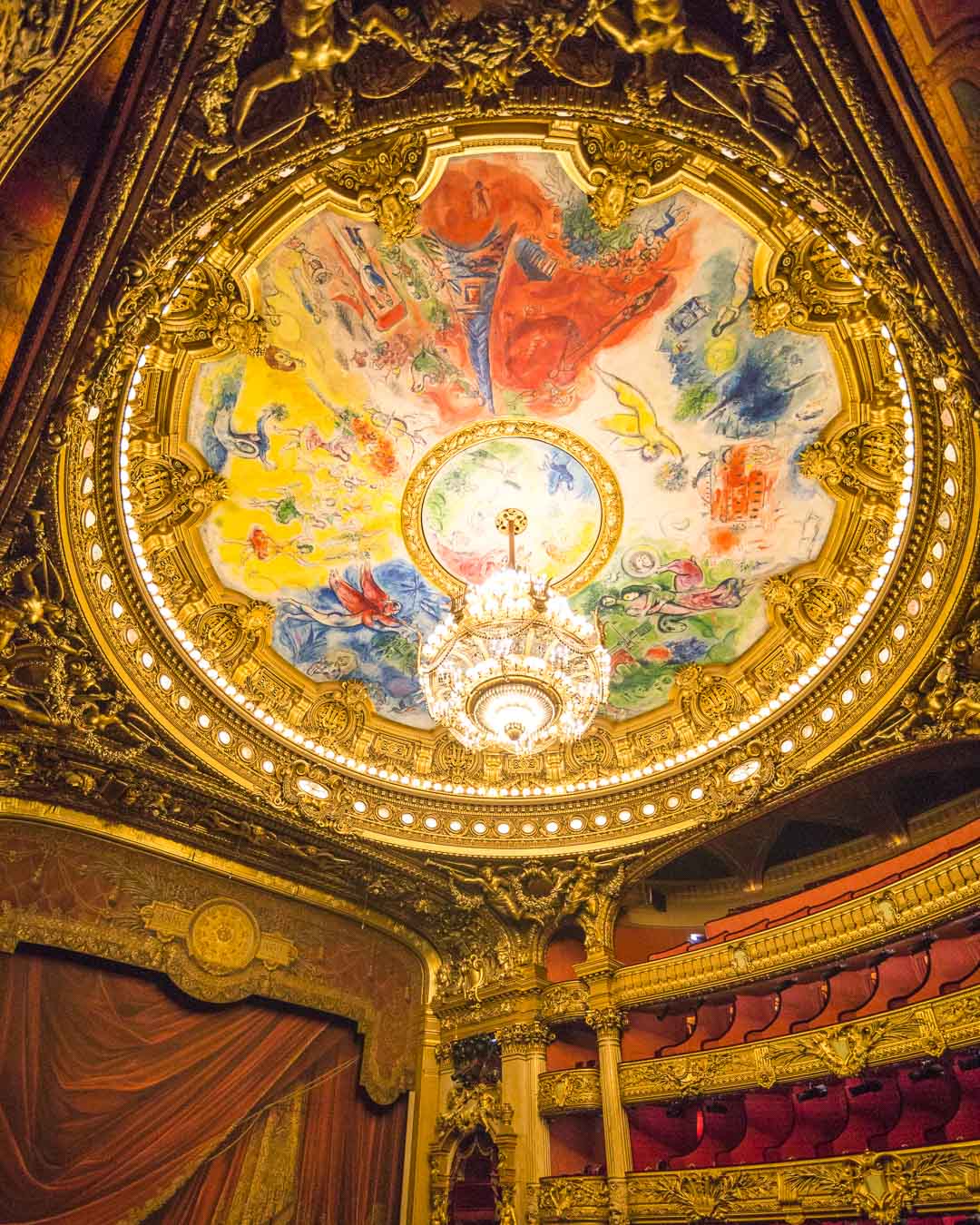
The horseshoe-shaped auditorium seats close to 1,979 people beneath a ceiling repainted by Marc Chagall in 1964, layered over the original Jules Eugene Lenepveu artwork. A seven-ton bronze and crystal chandelier hangs at its center.
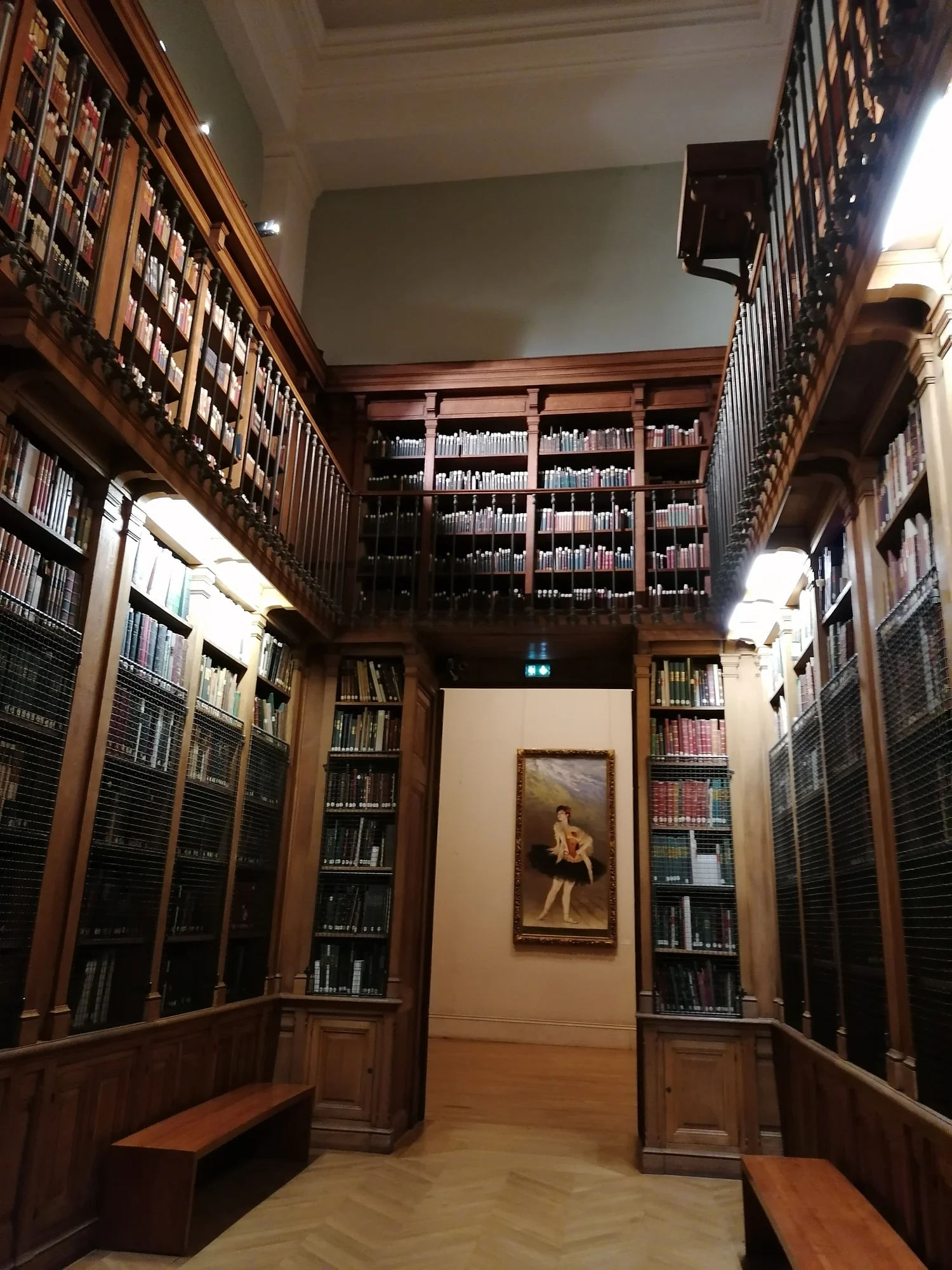
The Bibliothèque-Musée de l'Opéra houses scale models, costume designs, and memorabilia tracing the venue's history since it opened in 1875. Its collection includes stage set maquettes rarely displayed elsewhere.
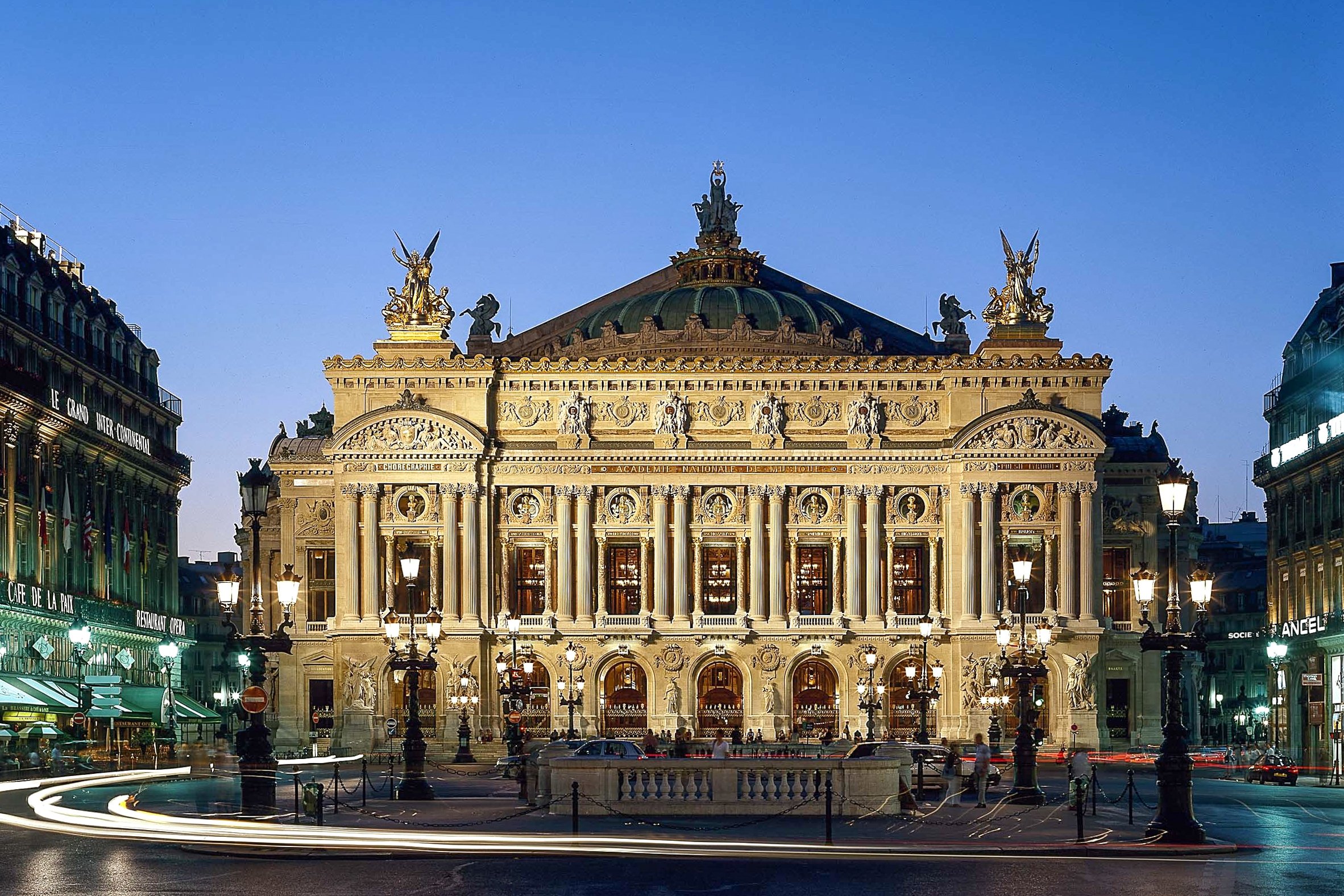
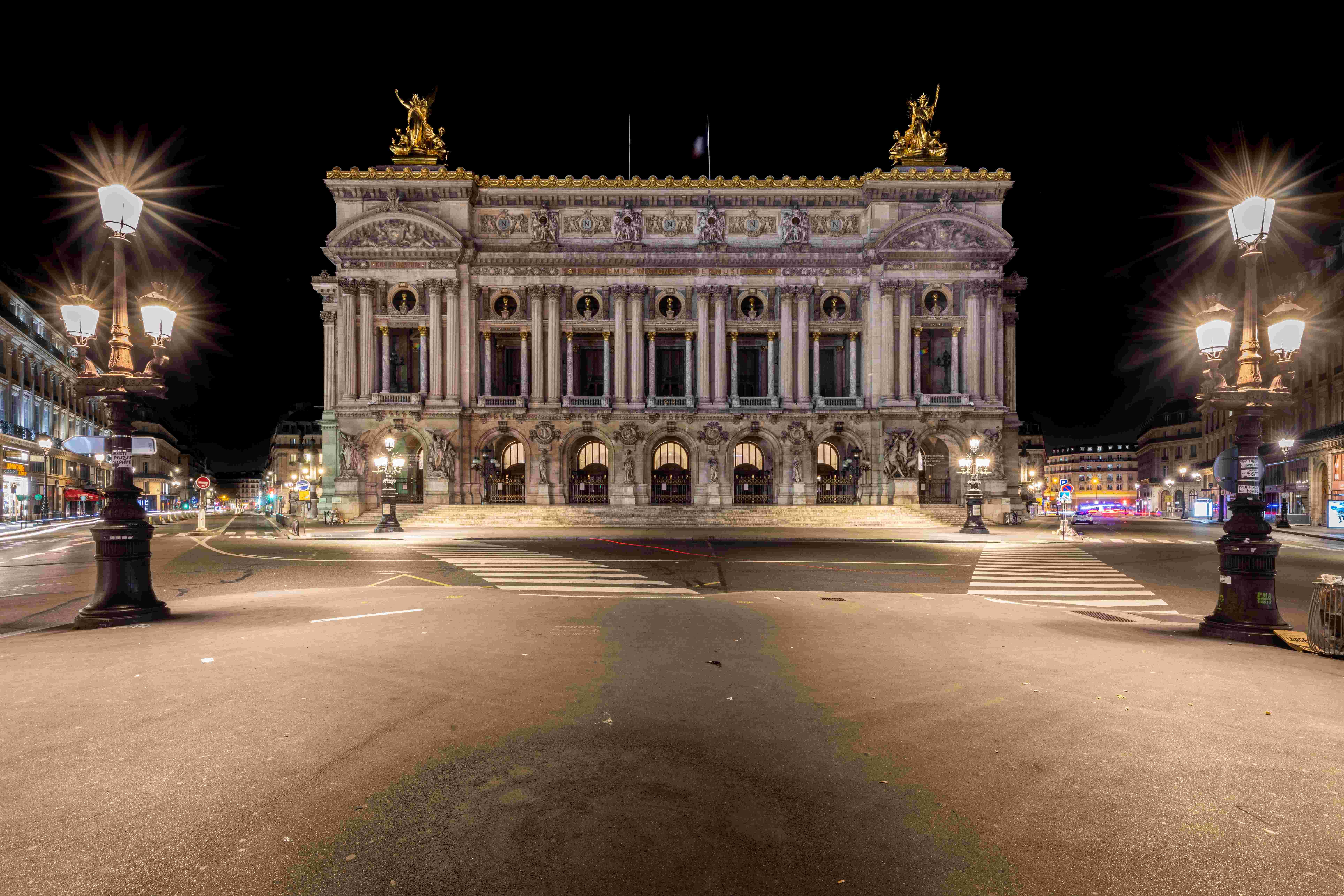
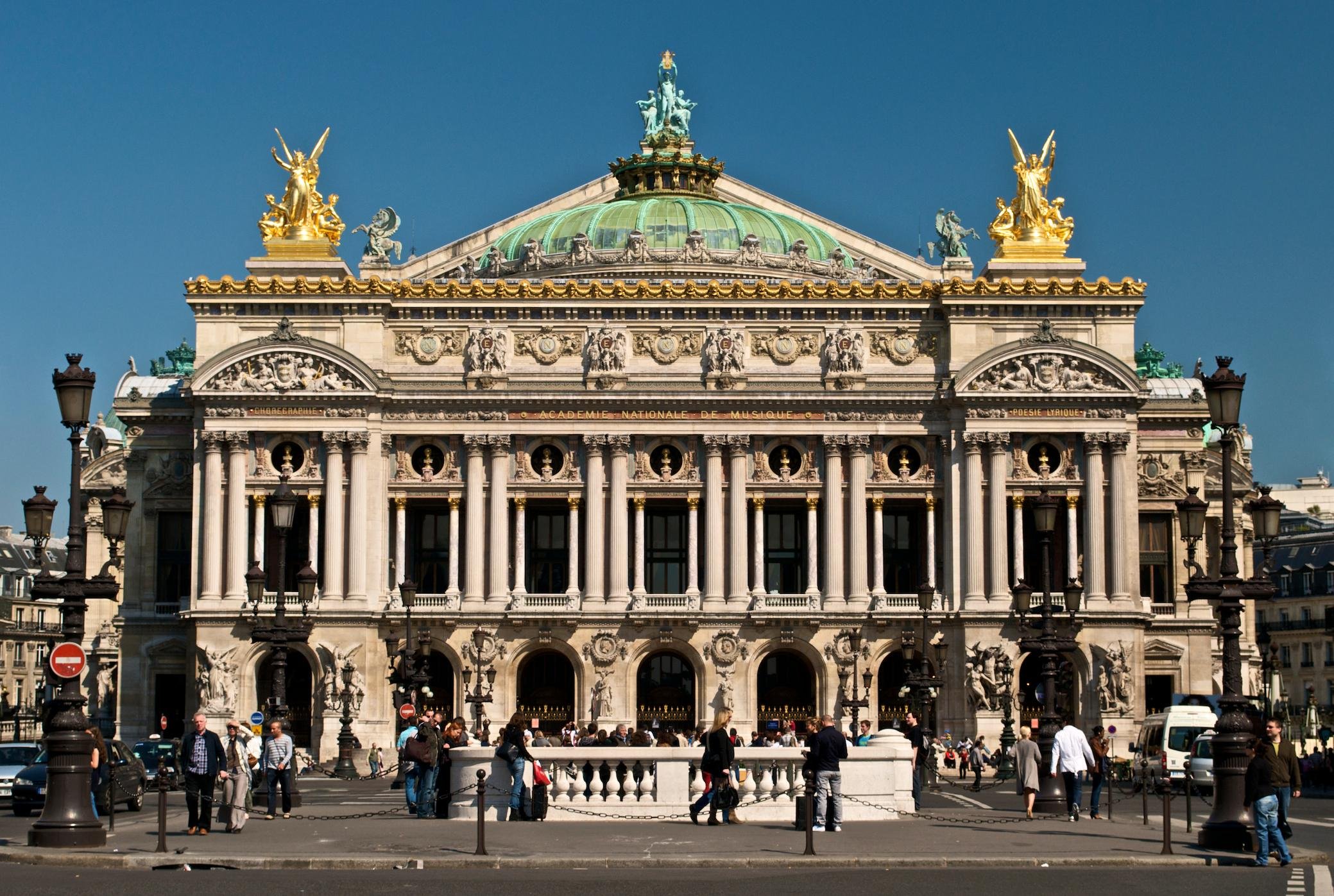
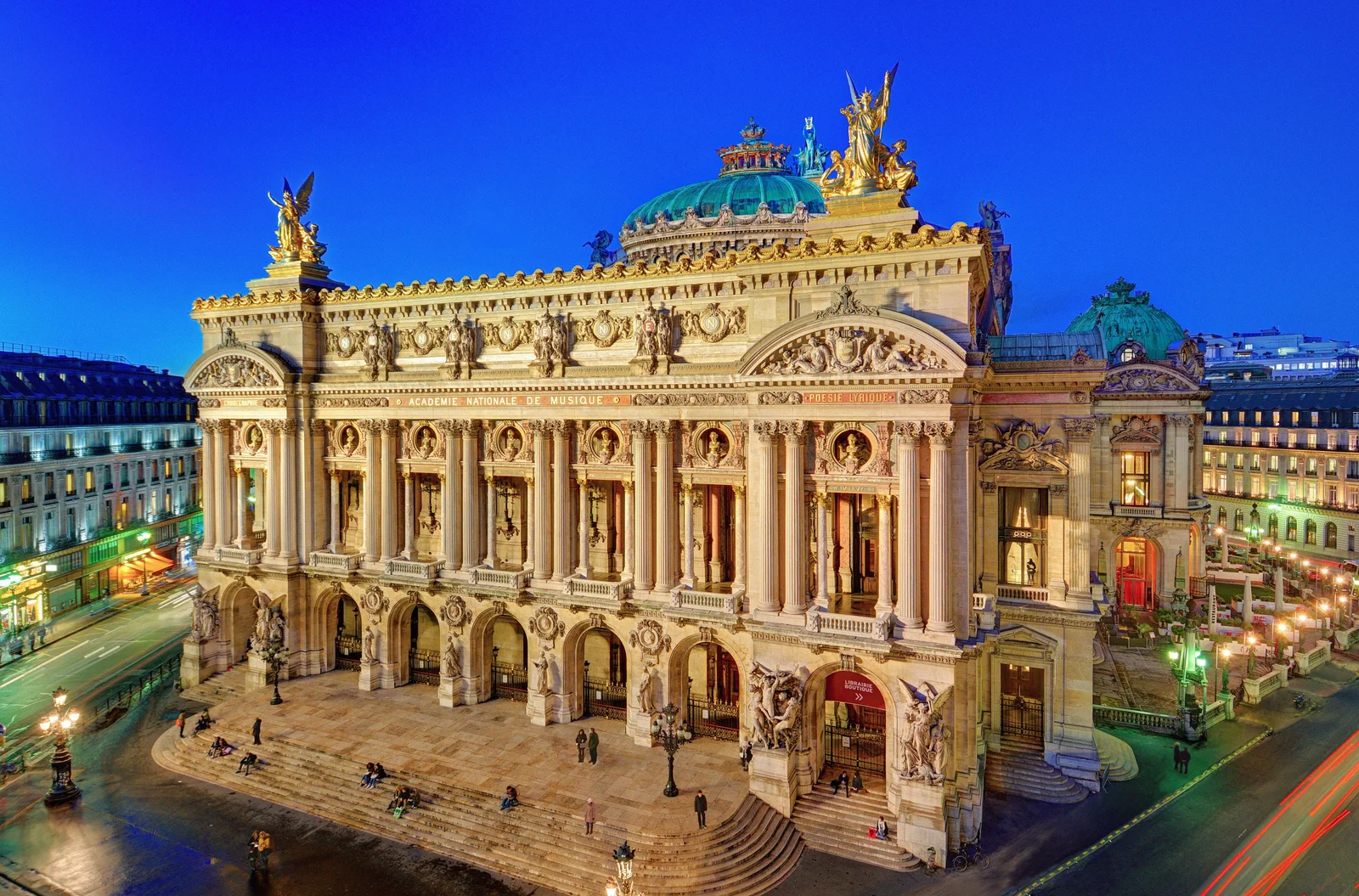
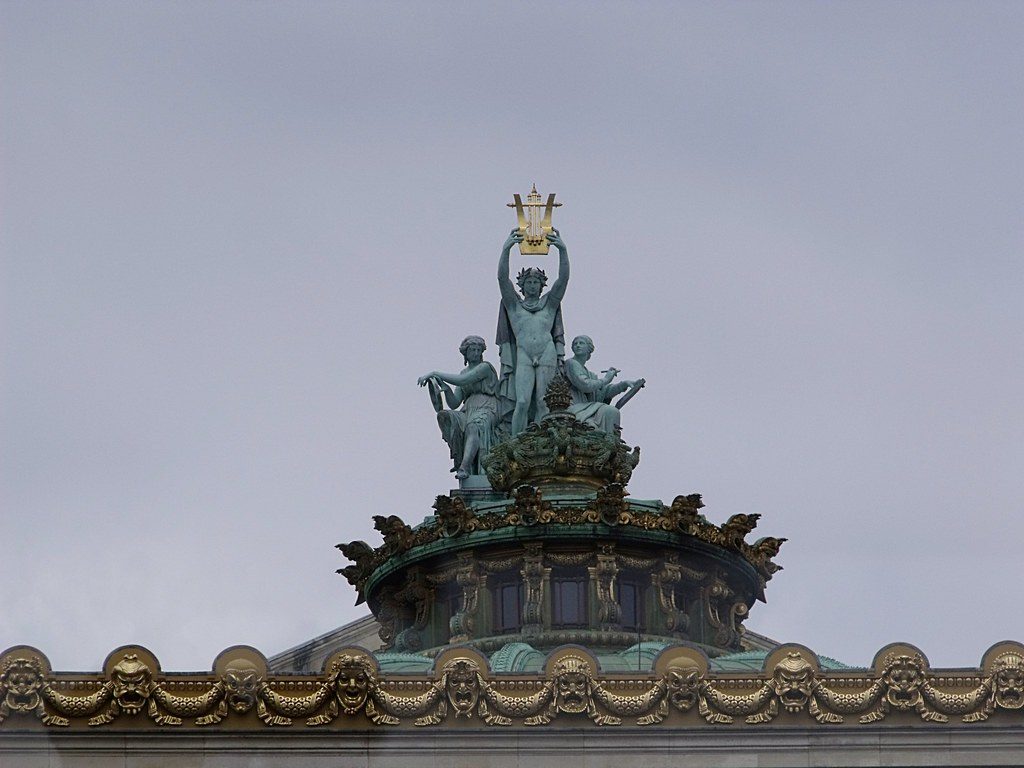
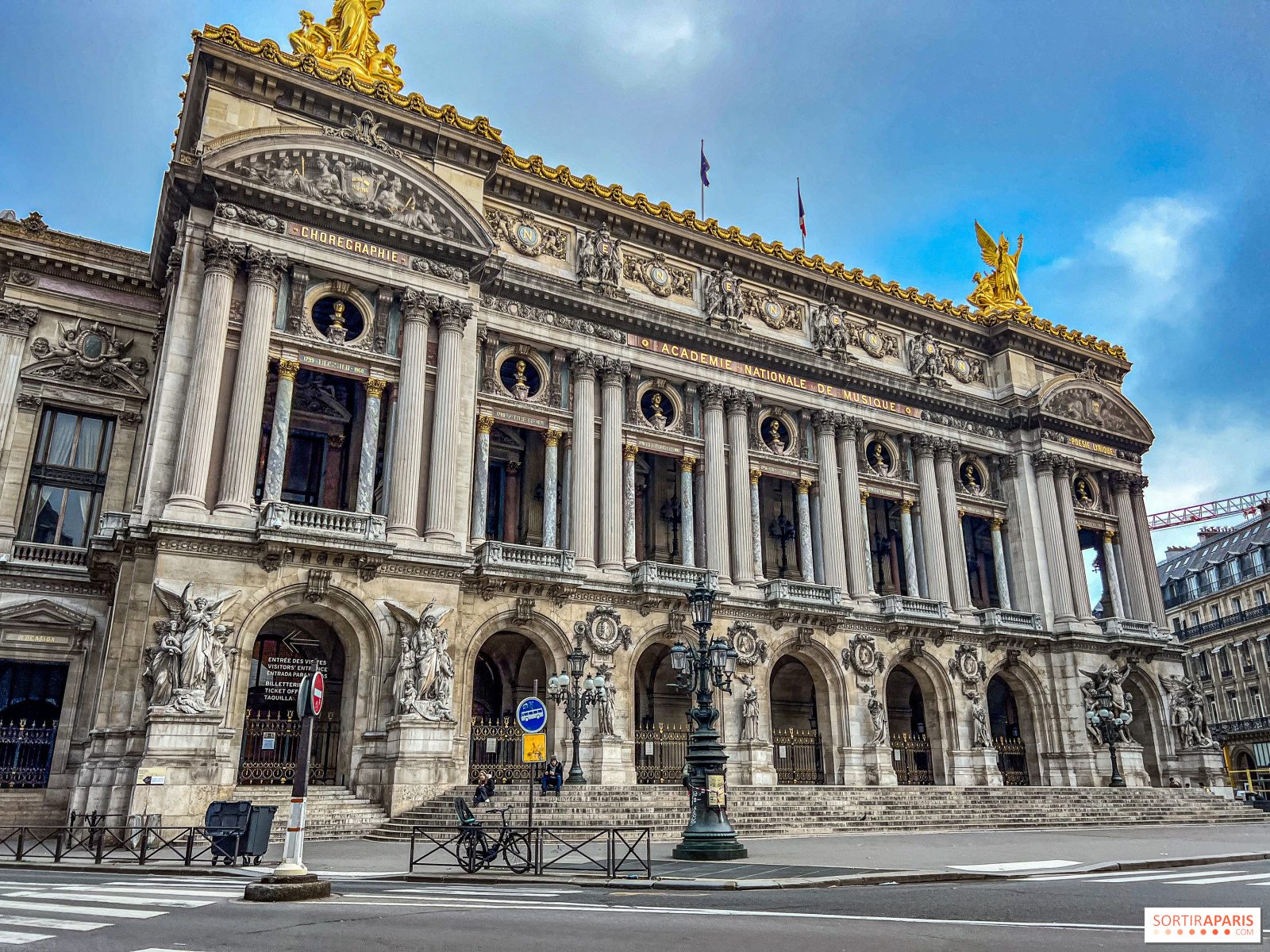
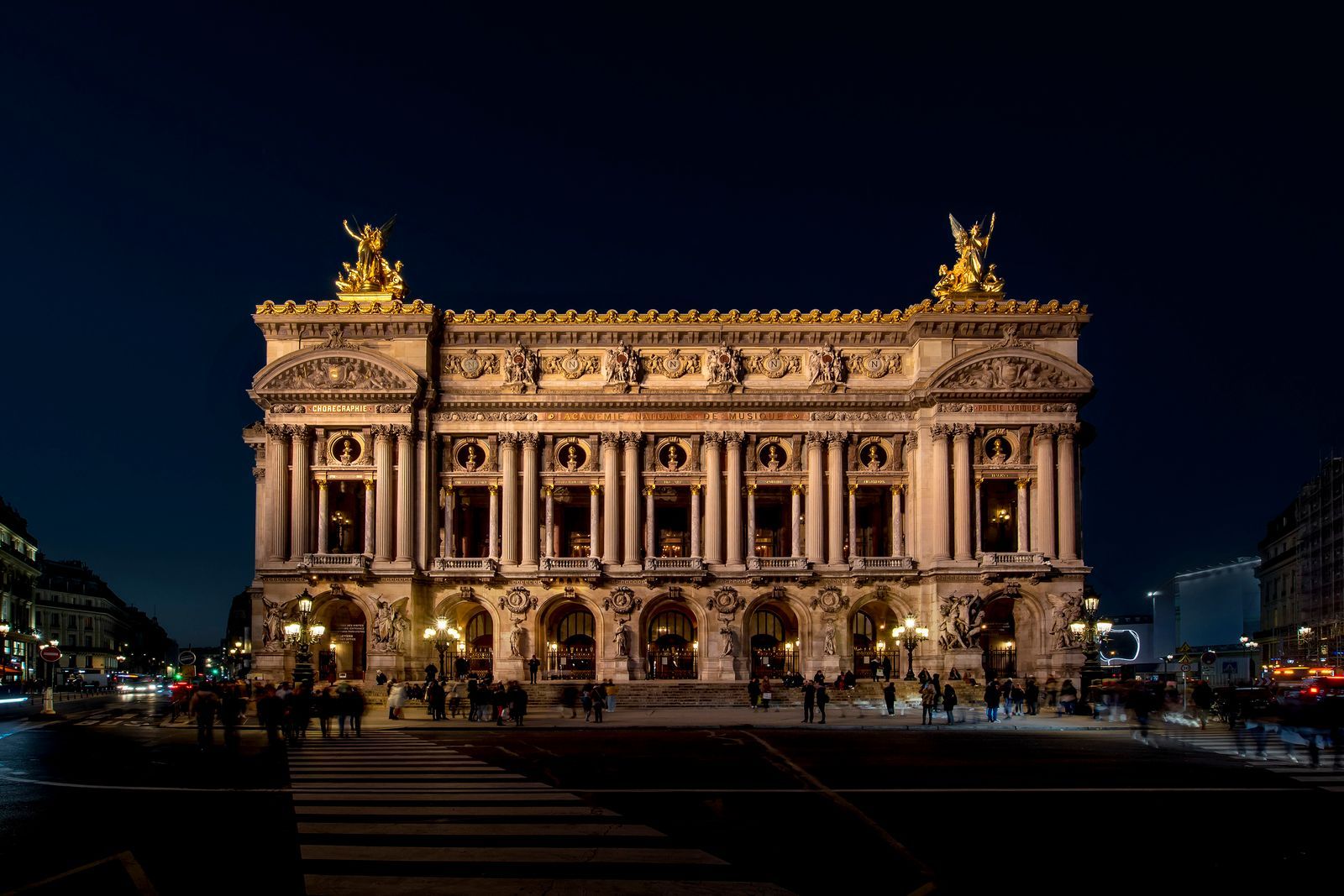
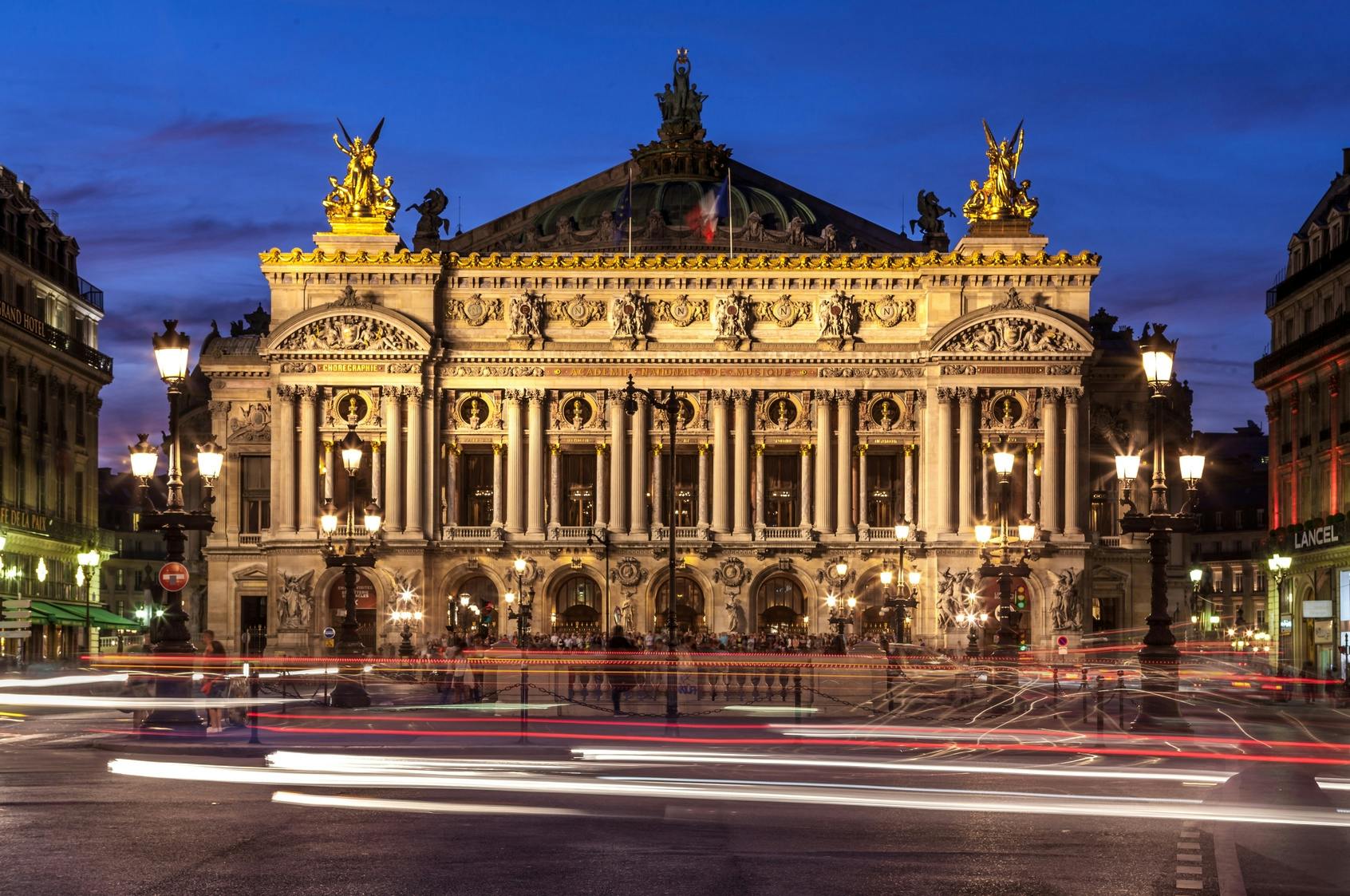
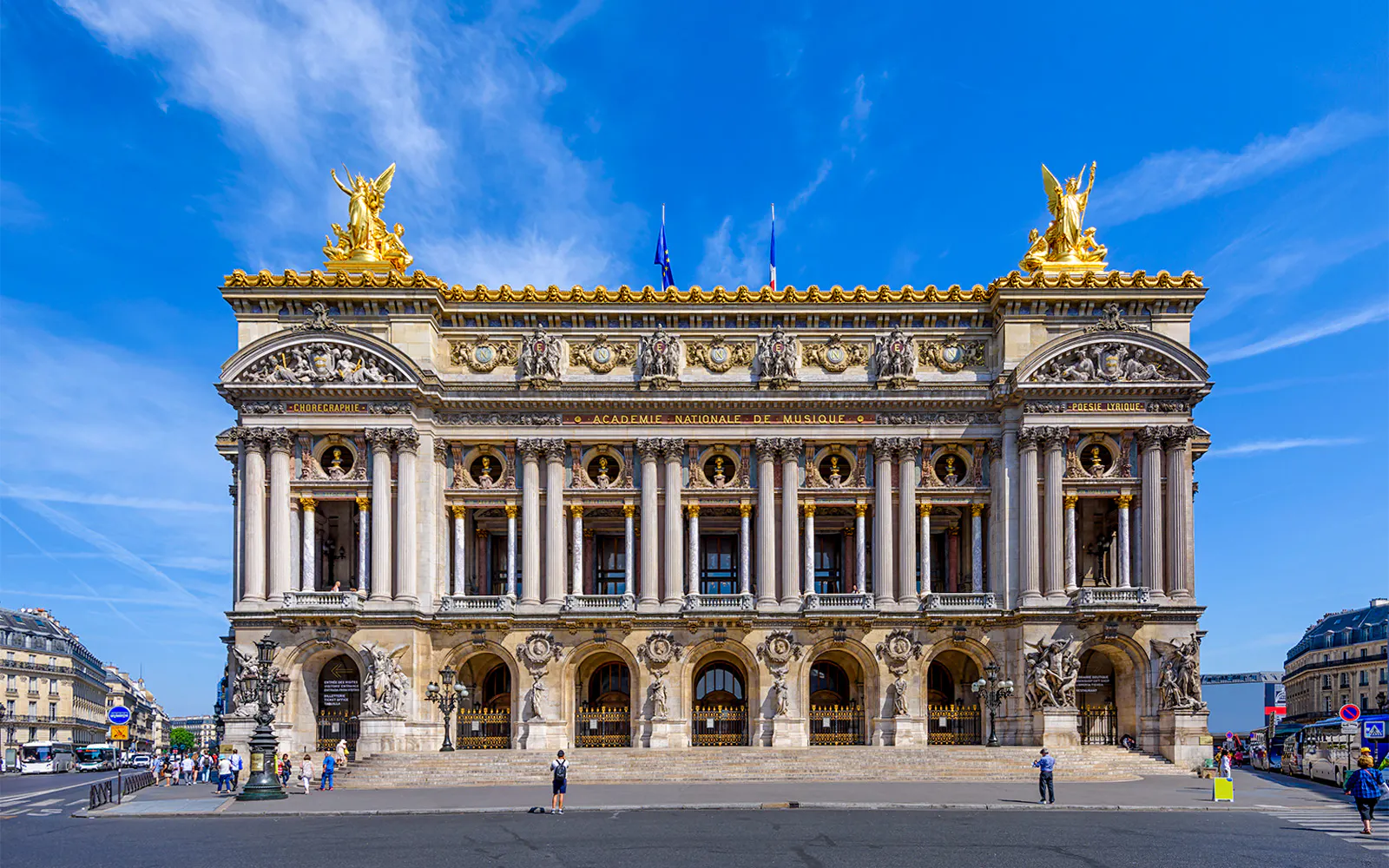
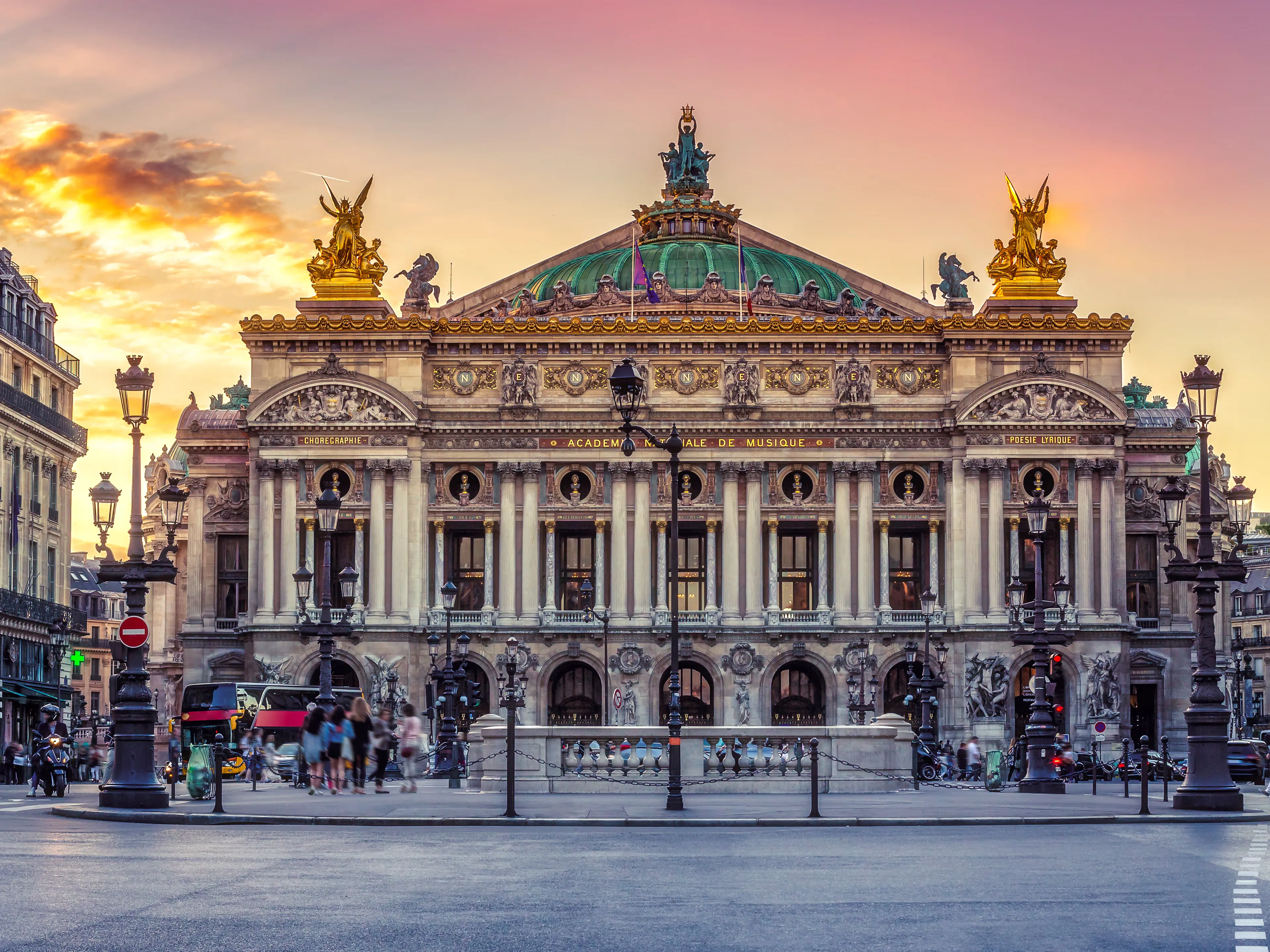
Above the facade stands a gilded bronze group depicting Apollo raising his lyre, flanked by figures of Poetry and Music, visible from Place de l'Opéra. The sculptures were added during the building's original 1861-1875 construction period.
Ornate private boxes closest to the stage, historically reserved for the most prominent patrons, featuring gilt carvings and red velvet upholstery matching the auditorium's color scheme. Sightlines from these boxes prioritize visibility of the audience as much as the stage.
You enter from Place de l'Opéra through the side vestibule, exchanging your mobile voucher for admission at the desk beneath the grand staircase rotunda.
Ascending the white marble steps, you pause at the first landing where allegorical statues flank the divided staircase—La Poésie Lyrique holds a lyre, La Musique Instrumentale a harp. The stairs branch left and right, climbing toward the foyer.
You walk the length of the Grand Foyer, fifty-four metres of gilt mirrors and mosaic friezes reflecting morning light through nine tall windows. Baudry's ceiling panels depict lyre players, poets, and dancers in trompe-l'oeil architectural frames. Beyond the foyer you step into the auditorium, where red velvet seats descend in five tiers toward the proscenium. Chagall's blue and yellow ceiling circles the six-tonne chandelier.
If you have booked a guided tour, your art historian identifies the sculptural program on the façade loggia—Apollo flanked by Poetry and Music—and explains the underground lake's structural role. Private tours access the rehearsal rooms and the shallow basin beneath the stage, where counterweights and trap machinery occupy the space once rumoured to hide a phantom. You exit through the Pythia Pavilion onto Rue Scribe after ninety minutes inside the palace.
All the details about your upcoming adventure in one place
Charles Garnier won the commission for Napoleon III's opera house at age thirty-five, beating 170 rival architects in an 1861 competition.
His 1,979-seat theatre opened in 1875 after fourteen years of construction, during which workers pumped an underground lake beneath the foundations—a flooded quarry that still holds eight months' reserve water for the Paris fire brigade. The building consumed 450,000 cubic feet of marble, sourced from seventeen European quarries, and required thirty kilograms of gold leaf to coat its façade and interior ornament.
The grand staircase rises thirty metres through a freestanding volume clad in white Seravezza marble, red Swedish breccia, and green Campan stone. Marc Chagall's 1964 ceiling fresco crowns the auditorium with fourteen panels depicting scenes from Mozart, Wagner, Verdi, and Debussy—a controversial modern insertion into Garnier's Second Empire design. The chandelier weighs six tonnes and holds 340 lights; in 1896 one of its counterweights fell through the ceiling, killing a concierge and inspiring the phantom legend later dramatised by Gaston Leroux.
Opera Garnier Paris tickets tour options today range from self-guided entry to theatrical presentations led by costumed performers, and private art history walks that decode the allegorical sculpture program. The Grand Foyer stretches fifty-four metres, lined with mosaics and gilt mirrors that reflect natural light through tall windows overlooking Avenue de l'Opéra. Visitors encounter Paul Baudry's ceiling frescoes illustrating music history, from Greek antiquity through Renaissance courts to nineteenth-century Paris. The building holds a museum displaying costume archives, set models, and historic posters.
The opera house remains an active performance venue, hosting ballet and opera between September and July. Morning visits between 10:00 and 12:00 avoid afternoon tour groups and capture the best natural illumination in the foyer galleries. The original 1875 gas lighting infrastructure, later converted to electricity, still dictates the chandelier's installation method—suspended from a single bronze chain through the painted dome.

Garnier consumed 450,000 cubic feet of marble from seventeen European quarries and required thirty kilograms of gold leaf to coat the palace interior.
There is no strict dress code for daytime visits to the Palais Garnier, but smart-casual attire is customary given the venue's ornate 19th-century interiors. Comfortable flat shoes are recommended since the tour route includes marble staircases and the sloped floor of the auditorium.
All visitors pass through a security screening and bag check at the entrance on Place de l'Opéra, similar to airport-style checks. Backpacks and handbags are permitted but will be opened for inspection, and large suitcases or wheeled luggage are not allowed inside the building.
Photography without flash is permitted in the Grand Foyer, the Grand Staircase, and most public areas of the Palais Garnier. Flash photography and tripods are prohibited inside the auditorium itself to protect the historic stage curtain and gilded décor.
Children are welcome on daytime visits, and there is no separate child pricing distinct from the standard non-resident rate of 25 EUR per adult listed in the ticket grid; younger children are often discounted or free depending on the specific tour option booked. The marble staircases and open Grand Foyer are engaging for kids, though strollers may need to be folded in busier gallery sections.
The Palais Garnier offers wheelchair access through a dedicated entrance on Rue Pillet-Will, and an elevator serves the main visitor levels including the Grand Foyer. Some areas, including sections of the amphitheater and upper galleries, remain accessible only via stairs due to the building's 1875 architecture, so visitors with mobility needs should call +33 1 71 25 24 23 ahead of arrival.
Eating and drinking are not permitted inside the auditorium, the Grand Foyer, or the museum galleries. Bottled water is generally tolerated in bag form but should not be consumed near gilded surfaces or painted ceilings, and there is no café inside the visitor circuit itself.
Standard hours, morning quieter
Opening hours
Daily 10:00–17:00, last admission 16:15
Opening hours
10:00 – 17:00
Getting there
City-center access via metro and bus
Accessibility
Most experiences are wheelchair-friendly — check individual tours
What to bring
Comfortable shoes, water, phone for mobile voucher
Public transport · 5-10 minutes from station · Single metro ticket around 2.15 EUR
Take Metro Line 3, 7, or 8 to the Opéra station, which exits directly onto Place de l'Opéra steps from the building.
Guided tour bookings can typically be cancelled or rescheduled up to 24 to 48 hours before the scheduled time for a full refund, depending on the operator. The standard non-resident entrance fee referenced across ticket tiers is 25 EUR per adult, and this amount is not refundable once the visit window has passed.
Recommended time
1.5-2 hours
Most visitors spend about 90 minutes exploring the opulent architecture, including the auditorium and marble staircase, when booking an opera garnier paris tickets tour. Arriving during the best arrival window of 10:00–12:00 ensures a smoother experience through the security checkpoints and into the Grand Foyer. Selecting a guided Paris landmark tour allows for deeper engagement with the history of the Napoleon III style, though you should allocate extra time if you wish to linger in the exhibition galleries.
Crowd levels through the day
Weather · crowds · average price — dots go green to amber to red as each metric rises.
March to May brings mild temperatures around 12-18°C and moderate crowds before the summer peak, with fewer school groups on weekday mornings.
Guided visits of the Palais Garnier often sell out on weekends, so reserve an opera garnier paris tickets tour slot several days ahead during autumn school holidays.
Place de l'Opéra, 75009 Paris, France
Guided tour groups typically gather at the front steps facing Avenue de l'Opéra
Get directionsIn 1860, Emperor Napoleon III survived an assassination attempt outside the old opera house on Rue Le Peletier. The near-disaster prompted an immediate decree: Paris needed a grander, safer venue with a dedicated imperial entrance. Architect Charles Garnier, then thirty-five and unknown, won the competition in 1861 with a design the empress reportedly called neither Greek nor Roman. Garnier replied it was Napoleon III style. Construction began in 1862 but halted repeatedly. Workers struck a subterranean lake, forcing Garnier to pump water for eight months and build a double foundation. The Franco-Prussian War suspended work in 1870, and the building served briefly as a military hospital and warehouse. When the Third Republic resumed construction in 1873, Garnier continued without imperial funding, often paying suppliers from his own salary. The Palais Garnier opened on January 5, 1875, with a performance blending excerpts from Les Huguenots, La Juive, and Hamlet. The Grand Foyer, modeled on Versailles galleries, stretched fifty-four meters beneath a ceiling painted by Paul Baudry. Marc Chagall replaced the original auditorium ceiling in 1964, a controversial overlay that preserved Eugène Lenepveu's work beneath. The chandelier, weighing over six tons, fell during a performance in 1896, killing one concierge and inspiring Gaston Leroux to anchor his 1910 novel The Phantom of the Opera around the underground lake and labyrinthine backstage. Today, visitors booking opera garnier paris tickets tour encounter both the phantom legend and Garnier's engineering triumph. The building shifted from Paris's primary opera house to a ballet-focused venue after the Opéra Bastille opened in 1989, yet guided tours reveal its unchanged opulence. The marble grand staircase, the foyer's gold leaf, and the five-tiered auditorium remain as they were in 1875, making opera garnier paris tickets tours a passage through Second Empire ambition frozen in stone and gilt.
Charles Garnier wins the architectural competition at age thirty-five with his eclectic Napoleon III style design.
Construction halts repeatedly as workers discover a subterranean lake, requiring months of pumping and a reinforced double foundation.
The Franco-Prussian War suspends work; the unfinished building serves as a military hospital before construction resumes under the Third Republic.
The Palais Garnier opens on January 5 with a gala performance blending excerpts from three operas before an audience of two thousand.
The auditorium chandelier falls during a performance, killing one person and later inspiring the Phantom of the Opera legend.
Marc Chagall paints a new ceiling for the auditorium, controversially overlaying Eugène Lenepveu's original 1874 work.
The Opéra Bastille opens as Paris's main opera venue, and the Palais Garnier transitions to focus primarily on ballet performances.
Stand at the bottom to capture the sweeping marble steps and the ornate ceiling frescoes above. This central hub is the best place to start your opera garnier paris tickets tour for a sense of the building's scale.
Position yourself in the center of this hall to frame the gold leaf, chandeliers, and mirrors. The vast corridor mimics the Galerie des Glaces in Versailles.
From this vantage point, frame the red velvet seating and the famous Chagall ceiling painted above the central chandelier. Ensure you remain within public access zones while capturing the auditorium.
Look for the intricate mosaics and vaulted ceilings that lead visitors into the main spaces. It offers a quieter atmosphere for architectural details when utilizing your opera garnier paris tickets tour tickets.
Step out onto this exterior gallery to photograph the facade sculptures and views toward Place de l'Opéra. This spot provides an iconic Paris landmark perspective for your opera garnier paris tickets tour tours.
Exploring the Palais Garnier with children reveals a world of gilded balconies and hidden history, making it a memorable outing for young visitors. An opera garnier paris tickets tour allows families to discover this iconic Paris landmark at their own pace while taking in the theater's ornate design.
Strollers are generally discouraged due to the historic architecture and numerous stairs; a baby carrier is recommended for navigating the venue comfortably
The site is engaging for all ages, with free admission for children under 12, making an opera garnier paris tickets tour tours a budget-friendly cultural stop
There are no dedicated baby-changing or nursing facilities on-site, so please plan accordingly before your arrival
A visit typically lasts 1 to 2 hours, fitting well within the 10:00–17:00 daily opening hours; arriving during the 10:00–12:00 window helps avoid the largest crowds for a smoother opera garnier paris tickets tour tour experience
Be sure to book your opera garnier paris tickets tour tickets in advance online to secure your entry, as capacity is limited and this historic site is popular year-round.
Visitors seeking a refined meal after their opera garnier paris tickets tour have excellent options directly on the premises and in the surrounding 9th arrondissement. This historic Paris landmark is surrounded by classic brasseries and upscale cafes perfect for a post-visit refreshment.
Located within the Palais Garnier, this elegant establishment offers a sophisticated menu with views of the square. It provides a convenient setting for those holding opera garnier paris tickets tour tickets who wish to dine in luxury immediately after their visit.
A legendary institution just steps from the main entrance, perfect for classic French onion soup or afternoon tea. It serves as a popular stop for guests finalizing their opera garnier paris tickets tour tours.
This 24-hour brasserie offers a wide variety of seafood and traditional dishes for visitors completing their opera garnier paris tickets tour tour. Its proximity makes it a reliable choice for lunch or dinner near the opera house.
Everything you need to know for your journey
The Palais Garnier is open daily from 10:00 to 17:00, with last admission at 16:15, and any opera garnier paris tickets tour tour should plan around this window.
Yes, a dedicated entrance on Rue Pillet-Will provides wheelchair access along with an elevator to main visitor levels, though some upper gallery areas remain stairs-only.
Large suitcases, wheeled luggage, tripods for use in the auditorium, drones, and glass bottles are among the items not permitted; all bags are screened at entry.
Photography without flash is allowed in public areas like the Grand Foyer and Grand Staircase, but flash and tripods are restricted inside the auditorium.
Arriving between 10:00 and 12:00 offers calmer crowds and better natural light in the Grand Foyer, making morning the recommended window for an opera garnier paris tickets tour.
There is no strict dress code, but smart-casual clothing and flat, comfortable shoes are recommended given the marble staircases and sloped auditorium floor.
Eating and drinking are not permitted inside the galleries, Grand Foyer, or auditorium, and there is no café along the visitor route itself.
Metro Line 3, 7, or 8 to the Opéra station puts you directly on Place de l'Opéra, a five to ten minute walk from the entrance.
Yes, children are welcome on a Paris Opera House tour, and the Grand Staircase and gilded Grand Foyer tend to hold their attention, though strollers may need folding in busier rooms.
Cancellations are generally accepted up to 24 to 48 hours before the scheduled time for a full refund, depending on the specific tour option booked.
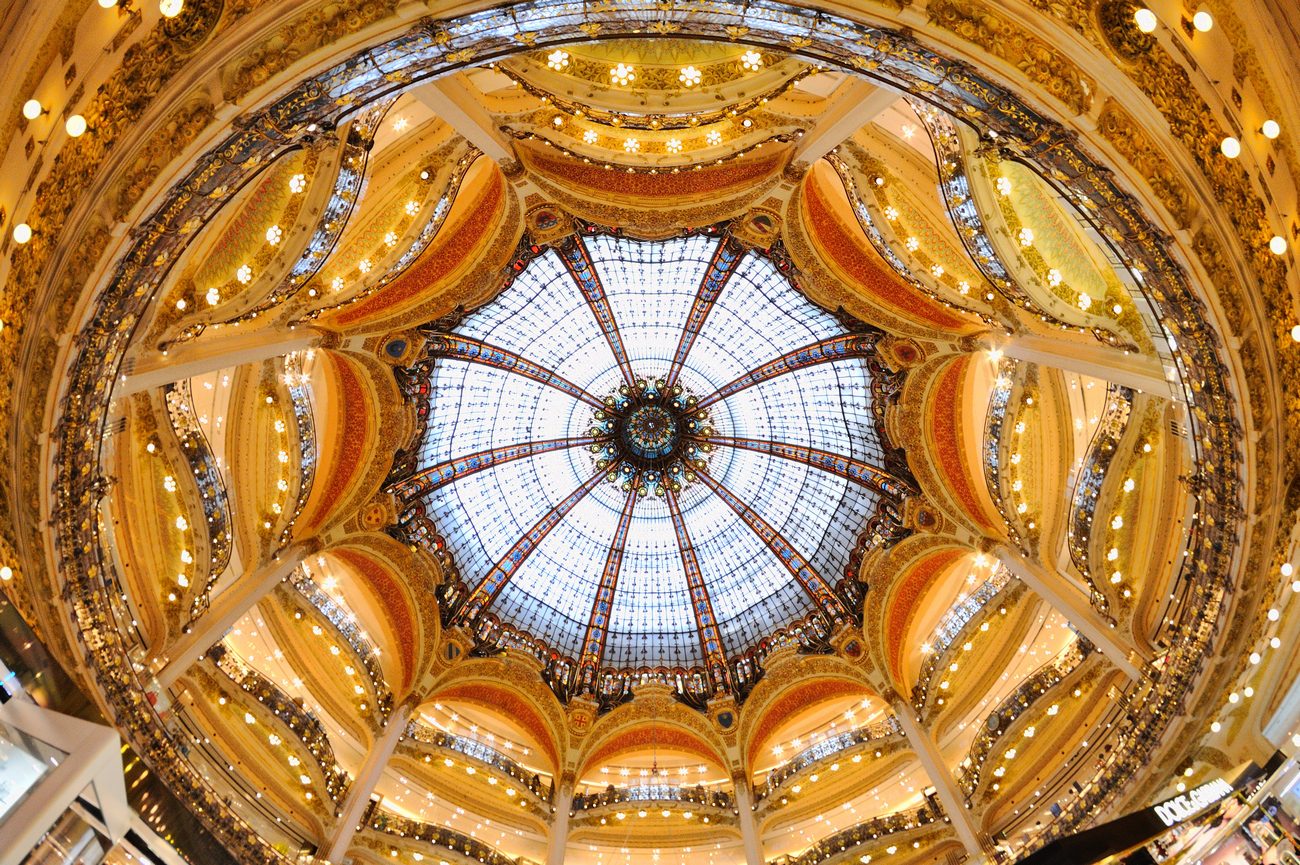
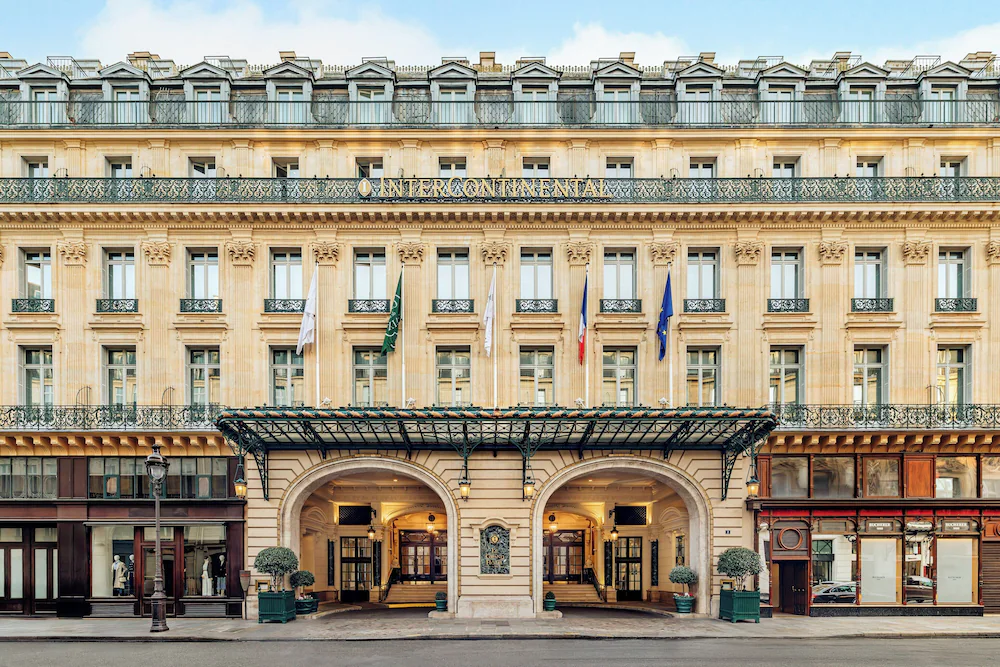
The Galeries Lafayette dome, Place Vendôme, and the Madeleine Church all sit within a 12-minute walk and pair well with an opera garnier paris tickets tour.
Advance booking is recommended, particularly for guided or skip-the-line options, since weekend and school-holiday slots for an opera garnier paris tickets tour can fill up several days ahead.
A Belle Époque department store famous for its stained-glass dome, free to enter and view from upper balconies.
A historic hotel directly on Place de l'Opéra dating to the same era as the Palais Garnier.
Join thousands of happy travelers who have discovered this incredible experience
Book Your Experience Now